Project 5.10: "Skill Game with App"
What you’ll learn
- ✅ App control: Move a player in a simple maze using app commands (FWD, BACK, LEFT, RIGHT, STOP).
- ✅ Reaction timing: Measure time between sensor/app signals and print a score.
- ✅ Scoring system: Keep score, lives, and levels with clean app messages.
- ✅ Feedback: Use LED/buzzer and OLED text to celebrate wins or show misses.
- ✅ Multiplayer: Alternate turns between Player A and Player B and track their scores.
Key ideas
- Short definition: A skill game is a loop of input → decision → feedback → score.
- Real‑world link: Arcade games and training apps measure reaction and accuracy with instant feedback.
Blocks glossary (used in this project)
- Bluetooth init + callback: Receive app messages and run code right away.
- Variables: Store player position, score, lives, level, and current turn.
- OLED shows / line / point: Draw maze walls and the player dot.
- Digital output (LED/Buzzer): Turn ON/OFF to show win or miss.
- Serial println: Print “KEY:VALUE” status for the app (SCORE, LIVES, LEVEL, TURN).
What you need
| Part | How many? | Pin connection |
|---|---|---|
| D1 R32 | 1 | USB cable (30 cm) |
| 0.96″ OLED (128×64) SSD1306 | 1 | I2C: SCL → Pin 22, SDA → Pin 21, VCC, GND |
| 10mm LED module | 1 | Signal → Pin 13, VCC, GND |
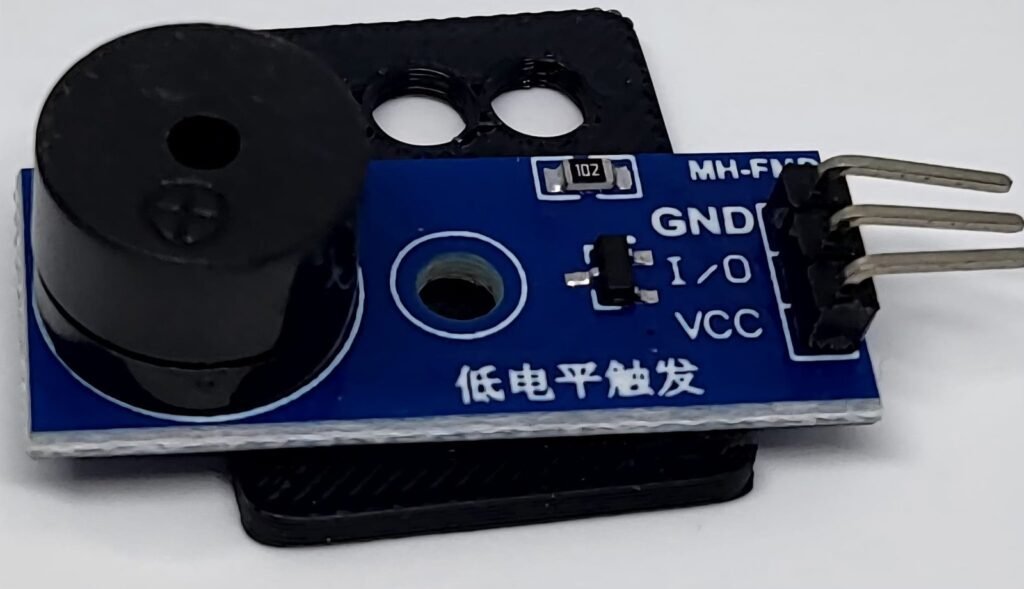
| Passive buzzer module | 1 | Signal → Pin 23, VCC, GND |
| Smartphone (Bluetooth) | 1 | Connect to device named “Clu‑Bots” |
🔌 Wiring tip: OLED uses I2C on pins 22/21. Use Pin 13 for LED and Pin 23 for buzzer. Keep wires short and secure.
📍 Pin map snapshot: 22/21 (OLED), 13 (LED), 23 (buzzer). Other pins are free.
Before you start
- USB cable is plugged in
- Serial monitor is open
- Test print shows:
print("Ready!") # Confirm serial is working so you can see messages
Microprojects 1–5
Microproject 5.10.1 – App‑controlled maze game
Goal: Move a player dot around a simple maze using app commands; block movement at borders.
Blocks used:
- BLE callback: Receive FWD/BACK/LEFT/RIGHT/STOP.
- OLED draw: Walls and player dot.
Block sequence:
- Init OLED and draw maze borders.
- Track player (x,y).
- On app command, move if inside bounds.
- Redraw and print position.
MicroPython code:
import machine  # Import machine to access I2C and pins
import oled128x64  # Import OLED driver for SSD1306 128x64
import ble_central  # Import BLE central role to scan/connect
import ble_peripheral  # Import BLE peripheral role to advertise a name
import ble_handle  # Import BLE handler to receive messages
i2c = machine.SoftI2C(scl=machine.Pin(22), sda=machine.Pin(21), freq=100000)  # Setup I2C bus on pins 22/21
oled = oled128x64.OLED(i2c, address=0x3c, font_address=0x3A0000, types=0)  # Initialize OLED at address 0x3C
print("Microproject 5.10.1: OLED ready")  # Status: OLED initialized
ble_c = ble_central.BLESimpleCentral()  # Create BLE central object
ble_p = ble_peripheral.BLESimplePeripheral('Clu-Bots')  # Create BLE peripheral named 'Clu-Bots'
ble_c.scan()  # Start scanning for peripherals
ble_c.connect(name='Clu-Bots')  # Connect to 'Clu-Bots' by name
print("BLE connected")  # Status: BLE connection established
player_x, player_y = 6, 6  # Set initial player position inside the screen
print("Player start:", player_x, player_y)  # Show starting position
walls = [(0,0,127,0), (0,63,127,63), (0,0,0,63), (127,0,127,63)]  # Define border walls (rectangle)
print("Walls defined:", len(walls))  # Confirm how many walls exist
def draw_maze():  # Function to draw the maze and player
    oled.clear()  # Clear the display before drawing
    for x1, y1, x2, y2 in walls:  # Loop through each wall segment
        oled.line(x1, y1, x2, y2, 1)  # Draw each wall line
    oled.shows('MAZE', x=0, y=0, size=1, space=0, center=False)  # Draw title text
    oled.point(player_x, player_y)  # Draw player as a single pixel
    oled.show()  # Refresh the screen so drawings appear
    print("Maze drawn; player at:", player_x, player_y)  # Confirm on serial
def in_bounds(nx, ny):  # Function to check screen bounds
    if nx < 1 or nx > 126 or ny < 1 or ny > 62:  # Check against border walls
        print("Blocked: out of bounds")  # Explain why movement fails
        return False  # Movement not allowed
    return True  # Movement allowed
def move(cmd):  # Function to handle movement commands
    global player_x, player_y  # Use global player coordinates
    nx, ny = player_x, player_y  # Start with current position
    if cmd == "FWD":  # If moving forward
        ny = player_y - 2  # Move up by 2 pixels
    elif cmd == "BACK":  # If moving backward
        ny = player_y + 2  # Move down by 2 pixels
    elif cmd == "LEFT":  # If moving left
        nx = player_x - 2  # Move left by 2 pixels
    elif cmd == "RIGHT":  # If moving right
        nx = player_x + 2  # Move right by 2 pixels
    elif cmd == "STOP":  # If stop command
        print("Stopped (no movement)")  # Acknowledge stop command
        return  # Exit with no movement
    if in_bounds(nx, ny):  # Check if new position is inside bounds
        player_x, player_y = nx, ny  # Apply movement
        print("Moved to:", player_x, player_y)  # Print new position
        draw_maze()  # Redraw maze with updated player position
    else:  # If movement is blocked
        print("No move: blocked")  # Explain why movement did not happen
def handle_method(key1, key2, key3, keyx):  # BLE receive callback for movement
    msg = str(key1)  # Convert incoming payload to text
    print("APP->R32:", msg)  # Show the received command
    move(msg)  # Try to move based on the command
handle = ble_handle.Handle()  # Create BLE handler object
handle.recv(handle_method)  # Attach the callback to receive BLE messages
draw_maze()  # Draw the initial maze and player
Reflection: Fast draw‑move‑redraw makes the game feel responsive and fun.
Challenge:
- Easy: Change step size from 2 to 3 pixels for faster movement.
- Harder: Add an inner wall line and prevent passing through it by adding a simple check.
Microproject 5.10.2 – Reaction game with sensors
Goal: Measure reaction time using two app events: START then STOP; print milliseconds.
Blocks used:
- Timing: Use ticks_ms and ticks_diff.
- Serial println: Print “REACTION(ms):…”.
Block sequence:
- Wait for “START”.
- Record start time.
- Wait for “STOP”.
- Compute and print reaction ms.
MicroPython code:
import time  # Import time to access tick functions
waiting = True  # Create a flag to indicate waiting for START
start_ms = 0  # Create a variable for the start timestamp
print("Microproject 5.10.2: Reaction game ready")  # Status message
def handle_method(key1, key2, key3, keyx):  # BLE callback to capture START/STOP
    global waiting  # Use global flag to manage game state
    global start_ms  # Use global timestamp to store START time
    msg = str(key1)  # Convert incoming payload to text
    print("APP->R32:", msg)  # Print the received command
    if msg == "START":  # If the START command arrives
        start_ms = time.ticks_ms()  # Record current ms as start time
        waiting = False  # Set flag to indicate we are timing now
        print("REACTION:START")  # Print status so user knows timing began
    elif msg == "STOP":  # If the STOP command arrives
        if waiting:  # If STOP comes without START first
            print("REACTION:NO_START")  # Print a helpful message
        else:  # If we have a valid START before
            end_ms = time.ticks_ms()  # Record current ms as end time
            reaction = time.ticks_diff(end_ms, start_ms)  # Compute ms difference
            print("REACTION(ms):", reaction)  # Print final reaction time
            waiting = True  # Reset flag to wait for next START
Reflection: Reaction games improve focus—try to beat your best time.
Challenge:
- Easy: Track “BEST:” by keeping the lowest reaction ms seen.
- Harder: Add a random delay before showing “START” in your app to prevent guessing.
Microproject 5.10.3 – Scoring and levels in the app
Goal: Keep score, lives, and level; level up every few points.
Blocks used:
- Variables: score, lives, level.
- Serial println: Print “SCORE”, “LIVES”, “LEVEL”.
Block sequence:
- Set score=0, lives=3, level=1.
- On “SCORE:+1” increase score and maybe level.
- On “MISS” lose a life; reset if lives=0.
MicroPython code:
score = 0  # Initialize score to zero
lives = 3  # Initialize lives to three
level = 1  # Initialize level to one
print("Microproject 5.10.3: SCORE:", score, "LIVES:", lives, "LEVEL:", level)  # Show initial stats
def handle_method(key1, key2, key3, keyx):  # BLE callback to update stats
    global score  # Use global score so changes persist
    global lives  # Use global lives so changes persist
    global level  # Use global level so changes persist
    msg = str(key1)  # Convert payload to text
    print("APP->R32:", msg)  # Print the command received
    if msg == "SCORE:+1":  # If player scores
        score += 1  # Add one point to score
        print("SCORE:", score)  # Print updated score
        if score % 5 == 0:  # If score is a multiple of 5
            level += 1  # Level up by one
            print("LEVEL:", level)  # Print updated level
    elif msg == "MISS":  # If player misses
        lives -= 1  # Subtract one life
        print("LIVES:", lives)  # Print remaining lives
        if lives <= 0:  # If no lives remain
            print("GAME:RESET")  # Print that game resets
            score, lives, level = 0, 3, 1  # Reset stats to starting values
            print("SCORE:", score, "LIVES:", lives, "LEVEL:", level)  # Print reset stats
Reflection: Levels make progress feel exciting—set fair rules and celebrate wins.
Challenge:
- Easy: Level up every 3 points instead of 5.
- Harder: Add “BONUS:+5” that increases score by 5 instantly.
Microproject 5.10.4 – Tactile and visual feedback
Goal: Use LED and buzzer for feedback; show “WIN!” or “MISS!” on OLED.
Blocks used:
- Digital output: LED on Pin 13, buzzer on Pin 23.
- OLED shows string: Draw quick messages.
Block sequence:
- On win → LED ON briefly + buzzer beep + “WIN!”.
- On miss → LED OFF + longer beep + “MISS!”.
- Keep messages short and readable.
MicroPython code:
import machine  # Import machine to access pins
import oled128x64  # Import OLED driver for SSD1306 128x64
led = machine.Pin(13, machine.Pin.OUT)  # Create LED output on Pin 13
buzzer = machine.Pin(23, machine.Pin.OUT)  # Create buzzer output on Pin 23
i2c = machine.SoftI2C(scl=machine.Pin(22), sda=machine.Pin(21), freq=100000)  # Setup I2C on pins 22/21
oled = oled128x64.OLED(i2c, address=0x3c, font_address=0x3A0000, types=0)  # Initialize OLED display
print("Microproject 5.10.4: LED/Buzzer/OLED ready")  # Status: outputs ready
def feedback_win():  # Function to show win feedback
    led.value(1)  # Turn LED ON to celebrate
    buzzer.value(1)  # Turn buzzer ON for a short beep
    oled.clear()  # Clear OLED before drawing text
    oled.shows('WIN!', x=40, y=20, size=2, space=0, center=False)  # Draw big WIN text
    oled.show()  # Refresh the display so text appears
    print("Feedback: WIN!")  # Print status for the app
    buzzer.value(0)  # Turn buzzer OFF after beep
    led.value(0)  # Turn LED OFF to finish
def feedback_miss():  # Function to show miss feedback
    led.value(0)  # Ensure LED is OFF on miss
    buzzer.value(1)  # Turn buzzer ON for a longer beep
    oled.clear()  # Clear OLED before drawing text
    oled.shows('MISS!', x=35, y=20, size=2, space=0, center=False)  # Draw big MISS text
    oled.show()  # Refresh the display so text appears
    print("Feedback: MISS!")  # Print status for the app
    buzzer.value(0)  # Turn buzzer OFF after beep
Reflection: Instant light/sound makes your game feel alive—players know results right away.
Challenge:
- Easy: Keep “WIN!” on screen for 500 ms with a delay in your app flow.
- Harder: Draw a star for wins and a cross for misses using lines and points.
Microproject 5.10.5 – Turn‑based multiplayer
Goal: Alternate turns between Player A and Player B; add points to the current player.
Blocks used:
- Variables: turn, scoreA, scoreB.
- Serial println: Print “TURN:A/B”, “SCORE_A”, “SCORE_B”.
Block sequence:
- Start with turn=”A”, scoreA=0, scoreB=0.
- On “NEXT” switch turn.
- On “SCORE:+1” add to the current player.
MicroPython code:
turn = "A"  # Initialize turn to Player A
scoreA, scoreB = 0, 0  # Initialize scores for Player A and B
print("Microproject 5.10.5: Turn=A, A=0, B=0")  # Status: multiplayer ready
def handle_method(key1, key2, key3, keyx):  # BLE callback for turn-based play
    global turn  # Use global turn to update between callbacks
    global scoreA  # Use global scoreA to persist changes
    global scoreB  # Use global scoreB to persist changes
    msg = str(key1)  # Convert payload to text
    print("APP->R32:", msg)  # Print received command
    if msg == "NEXT":  # If the NEXT turn command arrives
        turn = "B" if turn == "A" else "A"  # Toggle turn between A and B
        print("TURN:", turn)  # Print current player's turn
    elif msg == "SCORE:+1":  # If a point is scored
        if turn == "A":  # If it's Player A's turn
            scoreA += 1  # Add one point to A
            print("SCORE_A:", scoreA)  # Print A's score
        else:  # If it's Player B's turn
            scoreB += 1  # Add one point to B
            print("SCORE_B:", scoreB)  # Print B's score
Reflection: Fair turns keep the game friendly—everyone gets a chance to shine.
Challenge:
- Easy: Show a big “A” or “B” on the OLED to mark the turn.
- Harder: Add a “WINNER?” command that prints who leads right now.
Main project – Skill game with app
Blocks steps (with glossary)
- BLE init + callback: Receive app commands for movement, scoring, reaction, and turns.
- OLED: Draw maze borders and the player dot plus small stats.
- LED/Buzzer: Provide immediate win/miss feedback.
- Score/levels: Track score, lives, and level on serial for the app.
- Multiplayer: Alternate turns and track separate player scores.
Block sequence:
- Init BLE and attach callbacks.
- Setup OLED, LED, buzzer, and maze data.
- Move player on commands and check bounds.
- Run reaction game and scoring rules with feedback.
- Alternate turns and print scoreboard.
MicroPython code (mirroring blocks)
# Project 5.10 – Skill Game with App
import machine  # Import machine for pins and I2C hardware
import oled128x64  # Import OLED driver for SSD1306 128x64
import ble_central  # Import BLE central role
import ble_peripheral  # Import BLE peripheral role
import ble_handle  # Import BLE handler for callbacks
import time  # Import time for reaction timing and delays
# Setup OLED hardware
i2c = machine.SoftI2C(scl=machine.Pin(22), sda=machine.Pin(21), freq=100000)  # I2C bus on pins 22/21
oled = oled128x64.OLED(i2c, address=0x3c, font_address=0x3A0000, types=0)  # OLED object at address 0x3C
print("OLED ready")  # Confirm OLED setup
# Setup LED and buzzer on outputs
led = machine.Pin(13, machine.Pin.OUT)  # LED output on Pin 13
buzzer = machine.Pin(23, machine.Pin.OUT)  # Buzzer output on Pin 23
print("LED/Buzzer ready")  # Confirm outputs
# Setup BLE connection
ble_c = ble_central.BLESimpleCentral()  # BLE central instance
ble_p = ble_peripheral.BLESimplePeripheral('Clu-Bots')  # BLE peripheral named 'Clu-Bots'
ble_c.scan()  # Scan for BLE peripheral
ble_c.connect(name='Clu-Bots')  # Connect to peripheral by name
print("BLE connected")  # Confirm BLE connection
# Maze state and player position
player_x, player_y = 6, 6  # Player position inside bounds
walls = [(0,0,127,0), (0,63,127,63), (0,0,0,63), (127,0,127,63)]  # Border walls (rectangle)
print("Maze loaded")  # Confirm maze
# Game stats
score, lives, level = 0, 3, 1  # Score, lives, level
turn = "A"  # Current player's turn
scoreA, scoreB = 0, 0  # Multiplayer scores
print("Stats -> SCORE:", score, "LIVES:", lives, "LEVEL:", level, "TURN:", turn)  # Print stats
# Reaction game flags
waiting = True  # Waiting for START signal
start_ms = 0  # Holder for start timestamp
print("Reaction initialized")  # Confirm reaction setup
def draw_maze():  # Draw maze and HUD
    oled.clear()  # Clear screen before drawing
    for x1, y1, x2, y2 in walls:  # Loop through all wall segments
        oled.line(x1, y1, x2, y2, 1)  # Draw each wall line
    oled.point(player_x, player_y)  # Draw player dot
    hud = 'S:'+str(score)+' L:'+str(lives)+' Lv:'+str(level)+' T:'+turn  # Compose HUD text
    oled.shows(hud, x=0, y=54, size=1, space=0, center=False)  # Write HUD line
    oled.show()  # Refresh display
    print("HUD:", hud, "POS:", player_x, player_y)  # Print HUD and position
def in_bounds(nx, ny):  # Bounds check for movement
    if nx < 1 or nx > 126 or ny < 1 or ny > 62:  # Limit inside border
        print("Blocked: bounds")  # Explain blocking
        return False  # Deny movement
    return True  # Allow movement
def move(cmd):  # Movement handler
    global player_x, player_y  # Use global player position
    step = 2  # Movement step in pixels
    nx, ny = player_x, player_y  # Create candidate position
    if cmd == "FWD":  # Forward (up)
        ny -= step  # Move up
    elif cmd == "BACK":  # Back (down)
        ny += step  # Move down
    elif cmd == "LEFT":  # Left
        nx -= step  # Move left
    elif cmd == "RIGHT":  # Right
        nx += step  # Move right
    elif cmd == "STOP":  # Stop command
        print("STOP received")  # Print stop
        return  # Exit with no change
    if in_bounds(nx, ny):  # Check bounds
        player_x, player_y = nx, ny  # Apply movement
        print("Moved:", player_x, player_y)  # Print new position
        draw_maze()  # Redraw maze
    else:  # Out of bounds
        print("No move (blocked)")  # Explain block
def feedback_win():  # Win feedback
    led.value(1)  # LED ON
    buzzer.value(1)  # Buzzer ON
    oled.clear()  # Clear display
    oled.shows('WIN!', x=40, y=20, size=2, space=0, center=False)  # Big WIN text
    oled.show()  # Refresh display
    print("WIN!")  # Print win
    buzzer.value(0)  # Buzzer OFF
    led.value(0)  # LED OFF
def feedback_miss():  # Miss feedback
    led.value(0)  # LED OFF
    buzzer.value(1)  # Buzzer ON
    oled.clear()  # Clear display
    oled.shows('MISS!', x=35, y=20, size=2, space=0, center=False)  # Big MISS text
    oled.show()  # Refresh
    print("MISS!")  # Print miss
    buzzer.value(0)  # Buzzer OFF
def add_score(points):  # Score increment
    global score, level  # Use global stats
    score += points  # Increase score
    print("SCORE:", score)  # Print score
    if score % 5 == 0:  # Every 5 points level up
        level += 1  # Increase level
        print("LEVEL:", level)  # Print level
    draw_maze()  # Redraw HUD
def miss_life():  # Life decrement
    global lives, score, level  # Use global stats
    lives -= 1  # Decrease lives
    print("LIVES:", lives)  # Print lives
    if lives <= 0:  # If no lives left
        print("GAME:RESET")  # Announce reset
        score, lives, level = 0, 3, 1  # Reset stats
        print("SCORE:", score, "LIVES:", lives, "LEVEL:", level)  # Print reset stats
    draw_maze()  # Redraw HUD
def handle_method(key1, key2, key3, keyx):  # BLE receive callback
    global waiting  # Use reaction flag
    global start_ms  # Use reaction timestamp
    global turn  # Use current turn
    global scoreA, scoreB  # Use multiplayer scores
    msg = str(key1)  # Convert payload to text
    print("APP->R32:", msg)  # Print received command
    # Movement commands
    if msg in ("FWD", "BACK", "LEFT", "RIGHT", "STOP"):  # Movement set
        move(msg)  # Execute movement
        return  # End this callback
    # Reaction game
    if msg == "START":  # Start timing
        start_ms = time.ticks_ms()  # Record start ms
        waiting = False  # Mark timing started
        print("REACTION:START")  # Print status
        return  # End branch
    if msg == "STOP":  # Stop timing
        if waiting:  # If no start
            print("REACTION:NO_START")  # Explain issue
        else:  # Valid stop
            end_ms = time.ticks_ms()  # Record end ms
            reaction = time.ticks_diff(end_ms, start_ms)  # Compute reaction time
            print("REACTION(ms):", reaction)  # Print result
            waiting = True  # Reset to waiting
        return  # End branch
    # Scoring commands
    if msg == "SCORE:+1":  # Add point
        add_score(1)  # Update score
        feedback_win()  # Show win feedback
        if turn == "A":  # If Player A
            scoreA += 1  # Increase A score
            print("SCORE_A:", scoreA)  # Print A score
        else:  # If Player B
            scoreB += 1  # Increase B score
            print("SCORE_B:", scoreB)  # Print B score
        return  # End branch
    if msg == "MISS":  # Miss event
        miss_life()  # Decrease life
        feedback_miss()  # Show miss feedback
        return  # End branch
    # Turn switching
    if msg == "NEXT":  # Switch turn
        turn = "B" if turn == "A" else "A"  # Toggle turn
        print("TURN:", turn)  # Print current turn
        draw_maze()  # Update HUD with new turn
        return  # End branch
    # Status query
    if msg == "STATUS?":  # Ask for status
        print("STATUS:SCORE", score)  # Print score
        print("STATUS:LIVES", lives)  # Print lives
        print("STATUS:LEVEL", level)  # Print level
        print("STATUS:TURN", turn)  # Print turn
        print("STATUS:A", scoreA)  # Print Player A score
        print("STATUS:B", scoreB)  # Print Player B score
        return  # End branch
    # Unknown command
    print("CMD:UNKNOWN", msg)  # Report unrecognized command
handle = ble_handle.Handle()  # Create BLE handler
handle.recv(handle_method)  # Attach the BLE receive callback
draw_maze()  # Draw initial maze and HUD
# Heartbeat loop to keep app synced
while True:  # Main heartbeat loop
    print("HB:SCORE", score)  # Print heartbeat score
    print("HB:LIVES", lives)  # Print heartbeat lives
    print("HB:LEVEL", level)  # Print heartbeat level
    print("HB:TURN", turn)  # Print heartbeat turn
    time.sleep(2)  # Small delay for readability
External explanation
- What it teaches: You built a mini‑game controlled by an app: movement in a maze, reaction timing, scoring/levels, feedback, and multiplayer turns.
- Why it works: BLE callbacks turn app taps into instant actions; OLED shows the game state; LED/buzzer deliver quick feedback; variables track progress; short status prints keep the app display in sync.
- Key concept: “Input → update → feedback → score.”
Story time
Your board just became a pocket arcade. You tap—your player dashes. You react—WIN! The score climbs. Switch turns—your friend takes over. Tiny screen, big fun.
Debugging (2)
Debugging 5.10.1 – Difficulty not adjusted
Problem: Movement feels too easy or too hard at higher levels.
Clues: Player always moves by the same step, no matter the level.
Broken code:
step = 2 # Fixed step size that never changes
Fixed code:
step = 1 + (level // 2)  # Increase step every 2 levels to scale difficulty
print("Step size:", step)  # Print the current step for clarity
Why it works: Tying movement step to level makes the game ramp up in challenge naturally.
Avoid next time: Connect difficulty to variables (level, score) instead of fixed numbers.
Debugging 5.10.2 – Game elements are not responding
Problem: App sends commands but nothing changes on the screen.
Clues: Serial shows APP->R32, but the player doesn’t move or feedback doesn’t trigger.
Broken code:
def handle_method(...):
    msg = str(key1)  # Read message
    # move(msg)  # Forgot to call the movement function
Fixed code:
def handle_method(...):
    msg = str(key1)  # Read message
    move(msg)  # Call movement so position updates and OLED redraws
    print("Action executed for:", msg)  # Confirm execution on serial
Why it works: Executing the action updates the state and redraws visuals right away.
Avoid next time: Ensure every command path triggers the correct function.
Final checklist
- App movement changes the player’s position in the maze
- Reaction game prints milliseconds and resets correctly
- SCORE/LIVES/LEVEL update with clear prints
- LED/Buzzer/OLED feedback responds to WIN/MISS
- NEXT alternates turns and A/B scores update
Extras
- 🧠 Student tip: Add a “SAFE” mode that ignores movement for 3 seconds after MISS.
- 🧑🏫 Instructor tip: Have students write rules (scoring, levels, turns) before coding—clarity prevents bugs.
- 📖 Glossary:
- Reaction time: Milliseconds between “START” and “STOP.”
- Level: Difficulty stage that changes game behavior.
- Feedback: Immediate signals (LED/buzzer/OLED) that show success or failure.
- 💡 Mini tips:
- Keep status messages short and labeled for easy app parsing.
- Redraw the OLED only when something changes to stay responsive.
- Tune step size and lives to match players’ skill.