Project 1.8: "Lighting Patterns"
🚀 Project 1.8 – Lighting Patterns
🎯 What You’ll Learn
- ✅ Goal 1: Create LED patterns with timing and logic.
- ✅ Goal 2: Use PWM for effects like breathing.
- ✅ Goal 3: Synchronize LEDs with buzzer and serial control.
Key Ideas
- Digital output: Turn LEDs ON/OFF.
- PWM: Control brightness.
- Loops: Repeat patterns.
- Serial input: Control patterns interactively.
🧱 Blocks Glossary (used in this project)
pinX = machine.Pin(X, machine.Pin.OUT)→ LED output.pwmX = machine.PWM(machine.Pin(X))→ LED brightness control.pinX.value(1)→ LED ON.pinX.value(0)→ LED OFF.pwmX.duty()→ Set brightness.pwmX.freq()→ Set PWM frequency.time.sleep()→ Delay.
🧰 What You Need
| Part | How many? | Pin connection |
|---|---|---|
| D1 R32 | 1 | USB cable |
| LEDs | 5 | Pins 2, 4, 5, 12, 13 |
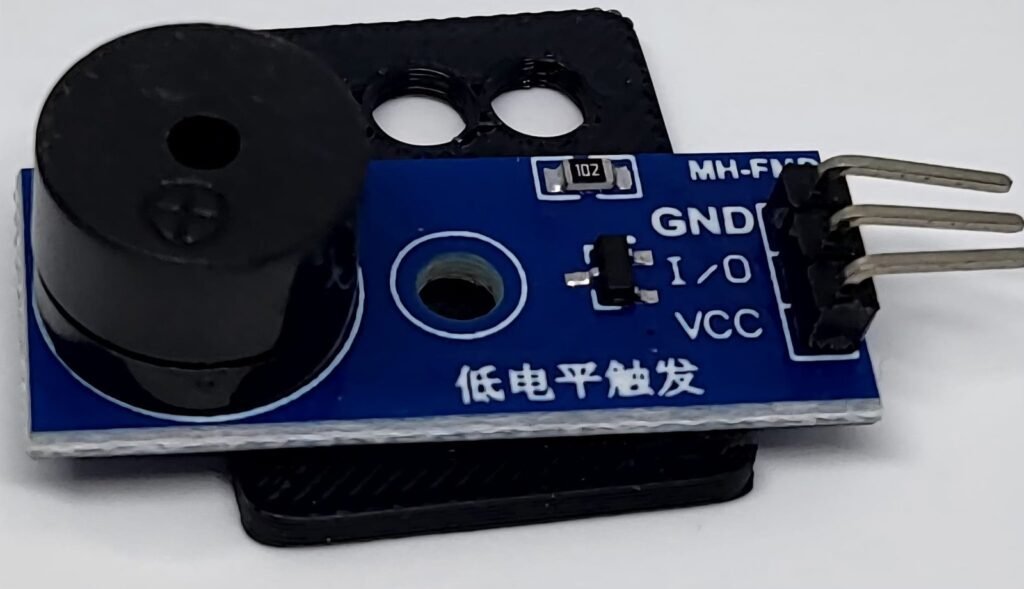
| Buzzer | 1 | Pin 26 |
🔌 Wiring tip: Connect LEDs to pins 2, 4, 5, 12, 13. Buzzer to pin 26.
📍 Pin map snapshot: LEDs = pins 2/4/5/12/13, buzzer = pin 26.
✅ Before You Start
- USB cable connected
- LEDs wired correctly
- Test print shows:
print("Ready!") # Confirm serial is working
🎮 Microprojects (5 Mini Missions)
🎮 Microproject 1.8.1 – LED Race
Blocks used: Digital output, Loop, Delay
Block sequence:
- Setup LEDs as outputs
- Turn ON one by one
- Repeat
MicroPython Code:
import machine, time                          # Import modules
pin2 = machine.Pin(2, machine.Pin.OUT)        # LED on pin 2
pin4 = machine.Pin(4, machine.Pin.OUT)        # LED on pin 4
pin5 = machine.Pin(5, machine.Pin.OUT)        # LED on pin 5
pin12 = machine.Pin(12, machine.Pin.OUT)      # LED on pin 12
pin13 = machine.Pin(13, machine.Pin.OUT)      # LED on pin 13
while True:                                   # Infinite loop
    pin2.value(1)                             # LED pin 2 ON
    print("LED pin2 ON")                      # Serial log
    time.sleep(0.3)                           # Delay
    pin2.value(0)                             # LED pin 2 OFF
    print("LED pin2 OFF")                     # Serial log
    pin4.value(1)                             # LED pin 4 ON
    print("LED pin4 ON")                      # Serial log
    time.sleep(0.3)                           # Delay
    pin4.value(0)                             # LED pin 4 OFF
    print("LED pin4 OFF")                     # Serial log
    pin5.value(1)                             # LED pin 5 ON
    print("LED pin5 ON")                      # Serial log
    time.sleep(0.3)                           # Delay
    pin5.value(0)                             # LED pin 5 OFF
    print("LED pin5 OFF")                     # Serial log
    pin12.value(1)                            # LED pin 12 ON
    print("LED pin12 ON")                     # Serial log
    time.sleep(0.3)                           # Delay
    pin12.value(0)                            # LED pin 12 OFF
    print("LED pin12 OFF")                    # Serial log
    pin13.value(1)                            # LED pin 13 ON
    print("LED pin13 ON")                     # Serial log
    time.sleep(0.3)                           # Delay
    pin13.value(0)                            # LED pin 13 OFF
    print("LED pin13 OFF")                    # Serial log
Reflection: LEDs light up one after another.
Challenge: Try reversing the order.
🎮 Microproject 1.8.2 – Breathing effect with PWM
Blocks used: PWM, Duty cycle, Loop
Block sequence:
- Setup LED with PWM
- Increase duty gradually
- Decrease duty gradually
MicroPython Code:
import machine, time                          # Import modules
pwm2 = machine.PWM(machine.Pin(2))            # LED on pin 2 with PWM
pwm2.freq(1000)                               # Set frequency to 1 kHz
while True:                                   # Infinite loop
    for duty in range(0, 1024, 32):           # Increase brightness
        pwm2.duty(duty)                       # Set duty cycle
        print("Brightness:", duty)            # Serial log
        time.sleep(0.05)                      # Delay
    for duty in range(1023, -1, -32):         # Decrease brightness
        pwm2.duty(duty)                       # Set duty cycle
        print("Brightness:", duty)            # Serial log
        time.sleep(0.05)                      # Delay
Reflection: LED brightness fades in and out.
Challenge: Try faster breathing by reducing delay.
🎮 Microproject 1.8.3 – Random pattern
Blocks used: Digital output, Delay
Block sequence:
- Setup LEDs
- Randomly choose ON/OFF manually (no Python random)
- Blink pattern
MicroPython Code:
import machine, time                          # Import modules
pin2 = machine.Pin(2, machine.Pin.OUT)        # LED pin 2
pin4 = machine.Pin(4, machine.Pin.OUT)        # LED pin 4
while True:                                   # Infinite loop
    pin2.value(1)                             # LED pin 2 ON
    pin4.value(0)                             # LED pin 4 OFF
    print("Pattern: pin2 ON, pin4 OFF")       # Serial log
    time.sleep(0.5)                           # Delay
    pin2.value(0)                             # LED pin 2 OFF
    pin4.value(1)                             # LED pin 4 ON
    print("Pattern: pin2 OFF, pin4 ON")       # Serial log
    time.sleep(0.5)                           # Delay
Reflection: LEDs alternate ON/OFF.
Challenge: Add more LEDs to the alternating pattern.
🎮 Microproject 1.8.4 – Buzzer synchronization
Blocks used: Digital output, External actuator (music.MIDI), Delay
Block sequence:
- Setup LED and buzzer
- Turn ON LED + play tone
- Synchronize timing
MicroPython Code:
import machine, time, music                   # Import modules
pin2 = machine.Pin(2, machine.Pin.OUT)        # LED pin 2
midi = music.MIDI(26)                         # Buzzer on pin 26
while True:                                   # Infinite loop
    pin2.value(1)                             # LED ON
    midi.pitch_time(440, 500)                 # Play tone 440 Hz for 500 ms
    print("LED ON + Tone 440 Hz")             # Serial log
    time.sleep(0.5)                           # Delay
    pin2.value(0)                             # LED OFF
    print("LED OFF")                          # Serial log
    time.sleep(0.5)                           # Delay
Reflection: LED and buzzer work together.
Challenge: Try different tones for each LED.
🎮 Microproject 1.8.5 – Serial pattern control
Blocks used: Digital output, Serial input, Logic
Block sequence:
- Setup LEDs as outputs
- Read serial input
- Control LEDs ON/OFF
MicroPython Code:
import machine, time                          # Import modules
pin2 = machine.Pin(2, machine.Pin.OUT)        # LED pin 2
pin4 = machine.Pin(4, machine.Pin.OUT)        # LED pin 4
while True:                                   # Infinite loop
    cmd = input("Enter command (on/off): ")   # Read serial input
    if cmd == "on":                           # If user types "on"
        pin2.value(1)                         # LED pin 2 ON
        pin4.value(1)                         # LED pin 4 ON
        print("LEDs ON")                      # Serial log
    elif cmd == "off":                        # If user types "off"
        pin2.value(0)                         # LED pin 2 OFF
        pin4.value(0)                         # LED pin 4 OFF
        print("LEDs OFF")                     # Serial log
    time.sleep(0.2)                           # Delay for stability
Reflection: User controls LEDs via serial input.
Challenge: Add more commands like “race” or “blink.”
✨ Main Project – Lighting Patterns
🔧 Blocks Steps (with glossary)
- Digital output: Control LEDs.
- PWM: Control brightness.
- Serial input: Interactive control.
Block sequence:
- Setup LEDs and buzzer.
- Create race pattern.
- Add breathing effect.
- Synchronize with buzzer.
- Control via serial.
MicroPython Code (mirroring blocks):
# Project 1.8 – Lighting Patterns
import machine, time, music                   # Import required modules
# Setup LEDs
pin2 = machine.Pin(2, machine.Pin.OUT)        # LED pin 2
pin4 = machine.Pin(4, machine.Pin.OUT)        # LED pin 4
pin5 = machine.Pin(5, machine.Pin.OUT)        # LED pin 5
# Setup buzzer
midi = music.MIDI(26)                         # Buzzer on pin 26
# Setup PWM LED
pwm2 = machine.PWM(machine.Pin(2))            # PWM LED on pin 2
pwm2.freq(1000)                               # Frequency for breathing effect
while True:                                   # Infinite loop
    # LED race
    pin2.value(1); print("Race: pin2 ON")     # LED pin 2 ON
    time.sleep(0.3)
    pin2.value(0); print("Race: pin2 OFF")    # LED pin 2 OFF
    pin4.value(1); print("Race: pin4 ON")     # LED pin 4 ON
    time.sleep(0.3)
    pin4.value(0); print("Race: pin4 OFF")    # LED pin 4 OFF
    pin5.value(1); print("Race: pin5 ON")     # LED pin 5 ON
    time.sleep(0.3)
    pin5.value(0); print("Race: pin5 OFF")    # LED pin 5 OFF
    # Breathing effect
    for duty in range(0, 1024, 64):           # Increase brightness
        pwm2.duty(duty)
        print("Breathing brightness:", duty)
        time.sleep(0.05)
    for duty in range(1023, -1, -64):         # Decrease brightness
        pwm2.duty(duty)
        print("Breathing brightness:", duty)
        time.sleep(0.05)
    # Buzzer sync
    pin2.value(1)                             # LED pin 2 ON
    midi.pitch_time(440, 500)                 # Play tone 440 Hz for 500 ms
    print("LED pin2 ON + Tone 440 Hz")
    pin2.value(0)                             # LED pin 2 OFF
    print("LED pin2 OFF")
    time.sleep(0.5)
📖 External Explanation
This project teaches how to create lighting effects with LEDs.
- Race pattern shows sequential control.
- Breathing effect uses PWM for smooth brightness changes.
- Synchronization links LEDs with buzzer tones.
- Serial input allows interactive control.
✨ Story Time
Your robot becomes a performer 🎆. It can race lights, breathe softly, blink randomly, and even play music while flashing. With serial commands, you become the DJ controlling the show.
🕵️ Debugging (2 Common Problems)
🐞 Debugging 1.8.A – Pattern stops
Problem: LEDs stop mid‑sequence.
Clues: Missing loop or delay too long.
Broken code:
pin2.value(1)
time.sleep(5)   # Delay too long
Fixed code:
pin2.value(1)
time.sleep(0.3) # Correct delay
Why it works: Short delays keep the sequence flowing.
Avoid next time: Always use small delays for patterns.
🐞 Debugging 1.8.B – Unsynchronized LEDs
Problem: LEDs blink out of sync with buzzer.
Clues: LED and buzzer not triggered together.
Broken code:
pin2.value(1)
time.sleep(0.5)
midi.pitch_time(440, 500)
Fixed code:
pin2.value(1)
midi.pitch_time(440, 500)
Why it works: LED and buzzer start at the same time.
Avoid next time: Trigger both actions together.
✅ Final Checklist
- LED race works.
- Breathing effect works.
- Random pattern alternates.
- Buzzer synchronized.
- Serial control implemented.
📚 Extras
- 🧠 Student tip: Try combining race + buzzer for a “light show.”
- 🧑🏫 Instructor tip: Show how PWM changes brightness smoothly.
- 📖 Glossary: PWM, duty cycle, breathing effect, synchronization.
- 💡 Mini tip: Always test one LED before adding more.