Project 5.12: "Integration N1 to N5"
What you’ll learn
- ✅ Integration: Combine sensors, actuators, app, routines, and preferences into one system.
- ✅ Home automation: Simulate lights, fans, and alerts controlled by app and sensors.
- ✅ Multi‑function service robot: Switch between assistant, monitor, and game modes.
- ✅ Security monitoring: Detect rain, soil, or sound and send alerts.
- ✅ Interactive game: Use app commands and sensors for multiplayer fun.
- ✅ Creative project: Leave space for students to invent their own integration.
Key ideas
- Short definition: Integration means connecting all parts so they work together.
- Real‑world link: Smart homes and robots combine sensors, apps, and routines to serve people in many ways.
Blocks glossary (used in this project)
- Digital inputs: Rain sensor, sound sensor.
- Analog input: Soil moisture sensor.
- DHT11: Temperature sensor.
- Digital outputs: Motors, LED, buzzer.
- OLED shows: Display status and modes.
- Bluetooth callback: Receive app commands.
- Variables + lists: Store routines, preferences, and modes.
- Serial println: Send “KEY:VALUE” messages for app display.
What you need
| Part | How many? | Pin connection |
|---|---|---|
| D1 R32 | 1 | USB cable (30 cm) |
| DHT11 | 1 | Signal → Pin 26, VCC, GND |
| Soil sensor | 1 | Signal → Pin 32 (ADC), VCC, GND |
| Raindrop sensor | 1 | DO → Pin 35, VCC, GND |
| Sound sensor | 1 | DO → Pin 34, VCC, GND |
| L298N motor driver + motors | 1 | IN1→18, IN2→19, IN3→5, IN4→23 |
| LED module | 1 | Signal → Pin 13, VCC, GND |
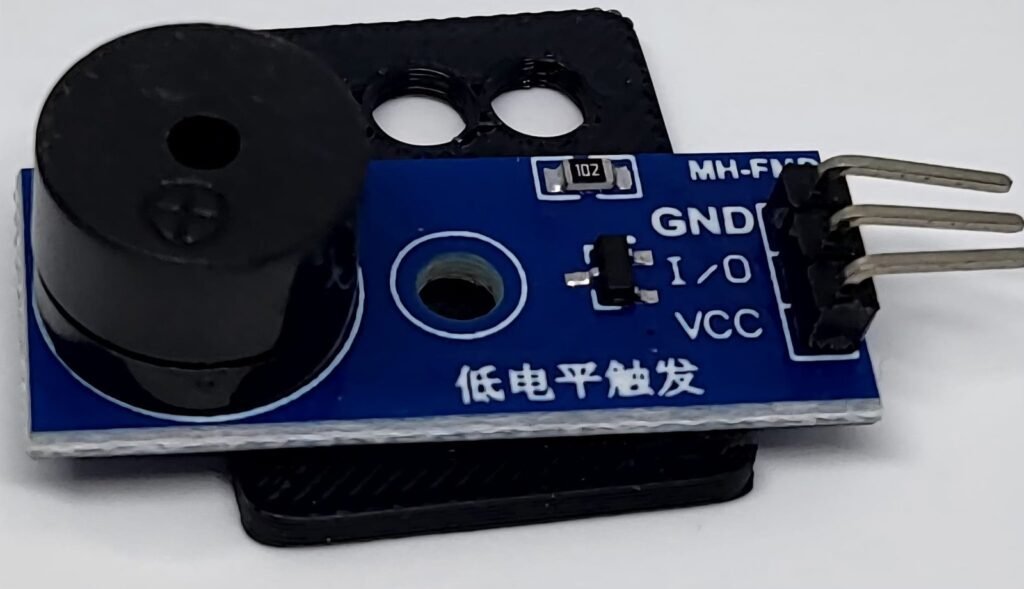
| Buzzer module | 1 | Signal → Pin 23, VCC, GND |
| OLED SSD1306 128×64 | 1 | I2C: SCL→22, SDA→21, VCC, GND |
| Smartphone (Bluetooth) | 1 | Connect to “Clu‑Bots” |
Before you start
- USB cable is plugged in
- Serial monitor is open
- Test print shows:
print("Ready!") # Confirm serial is working
Microprojects 1–5
Microproject 5.12.1 – Home automation system (simulated)
Goal: Control LED (light) and buzzer (alarm) with app commands.
Blocks used:
- Digital outputs: LED, buzzer.
- Serial println: Print “HOME:LIGHT_ON/OFF”, “HOME:ALARM_ON/OFF”.
MicroPython code:
import machine  # Import machine for pins
led = machine.Pin(13, machine.Pin.OUT)  # LED on Pin 13
buzzer = machine.Pin(23, machine.Pin.OUT)  # Buzzer on Pin 23
print("Microproject 5.12.1: Home automation outputs ready")  # Confirm setup
def home_light(on):  # Function to control light
    led.value(1 if on else 0)  # Set LED ON if on=True else OFF
    print("HOME:LIGHT_ON" if on else "HOME:LIGHT_OFF")  # Print status
def home_alarm(on):  # Function to control alarm
    buzzer.value(1 if on else 0)  # Set buzzer ON if on=True else OFF
    print("HOME:ALARM_ON" if on else "HOME:ALARM_OFF")  # Print status
Reflection: Simple ON/OFF commands simulate smart home devices.
Challenge:
- Easy: Add “HOME:FAN_ON/OFF”.
- Harder: Add automatic alarm when rain sensor triggers.
Microproject 5.12.2 – Multi‑function service robot
Goal: Switch between modes: ASSISTANT, MONITOR, GAME.
Blocks used:
- Variable mode: Store current mode.
- Serial println: Print “MODE:…”.
MicroPython code:
mode = "ASSISTANT"  # Start in assistant mode
print("Microproject 5.12.2: Mode initialized to", mode)  # Confirm start mode
def set_mode(new_mode):  # Function to change mode
    global mode  # Use global mode variable
    mode = new_mode  # Update mode
    print("MODE:", mode)  # Print new mode
Reflection: Modes let one robot do many jobs—like switching hats.
Challenge:
- Easy: Add “MODE:SECURITY”.
- Harder: Add OLED display showing current mode.
Microproject 5.12.3 – Security and monitoring system with app
Goal: Use rain, soil, and sound sensors to trigger alerts.
Blocks used:
- Digital/analog inputs: Rain, soil, sound.
- Serial println: Print “ALERT:RAIN/DRY_SOIL/NOISE”.
MicroPython code:
import dhtx  # Import DHT11 library
import machine  # Import machine for ADC and Pin
sensor = dhtx.DHT11(26)  # DHT11 on Pin 26
adc32 = machine.ADC(machine.Pin(32))  # Soil sensor on Pin 32
adc32.atten(machine.ADC.ATTN_11DB)  # Configure ADC attenuation
adc32.width(machine.ADC.WIDTH_12BIT)  # Use 12-bit resolution
rain = machine.Pin(35, machine.Pin.IN)  # Raindrop sensor on Pin 35
sound = machine.Pin(34, machine.Pin.IN)  # Sound sensor on Pin 34
print("Microproject 5.12.3: Sensors ready")  # Confirm setup
temp_c = sensor.temperature()  # Read temperature
soil_raw = adc32.read()  # Read soil raw value
soil_pct = int((4095 - soil_raw) * 100 / 4095)  # Map soil to percent
rain_state = rain.value()  # Read rain state
sound_state = sound.value()  # Read sound state
print("TEMP:", temp_c)  # Print temperature
print("SOIL(%):", soil_pct)  # Print soil percent
print("RAIN:", rain_state)  # Print rain state
print("SOUND:", sound_state)  # Print sound state
if rain_state == 1:  # If rain detected
    print("ALERT:RAIN")  # Print rain alert
if soil_pct < 25:  # If soil too dry
    print("ALERT:DRY_SOIL")  # Print dry soil alert
if sound_state == 1:  # If loud sound detected
    print("ALERT:NOISE")  # Print noise alert
Reflection: Multiple sensors make monitoring smarter—alerts show risks clearly.
Challenge:
- Easy: Add “ALERT:HEAT” if temp > 32.
- Harder: Add combined “ALERT:FLOOD_RISK” if rain=1 and soil>80.
Microproject 5.12.4 – Multi‑device interactive game
Goal: Use app commands and sensors for a multiplayer game.
Blocks used:
- Bluetooth callback: Receive commands.
- Variables: Track scores.
- Serial println: Print “GAME:…”.
MicroPython code:
scoreA, scoreB = 0, 0  # Initialize scores
turn = "A"  # Start with Player A
print("Microproject 5.12.4: Game initialized")  # Confirm setup
def game_score(player):  # Function to add score
    global scoreA, scoreB, turn  # Use global variables
    if player == "A":  # If Player A scores
        scoreA += 1  # Increase A score
        print("SCORE_A:", scoreA)  # Print A score
    else:  # If Player B scores
        scoreB += 1  # Increase B score
        print("SCORE_B:", scoreB)  # Print B score
    turn = "B" if turn == "A" else "A"  # Switch turn
    print("TURN:", turn)  # Print whose turn it is
Reflection: Multiplayer games make robots social—turns keep it fair.
Challenge:
- Easy: Add OLED display showing scores.
- Harder: Add “WINNER?” command to print who leads.
Microprojects 1–5
Microproject 5.12.5 – Free creative project
Goal: Build “Garden Guardian”: a creative combo that watches rain/soil, announces status, and plays a celebratory sound/light pattern when conditions are ideal.
Blocks used:
- Inputs: DHT11, soil ADC, rain DO.
- Outputs: LED, buzzer, OLED.
- Serial println: NOTIFY/DETAIL/STATUS lines.
Block sequence:
- Read TEMP, SOIL(%), RAIN.
- If soil is 40–70% and no rain, show “GARDEN GOOD” on OLED and celebrate with LED/buzzer.
- Else, print status and any alert (DRY_SOIL or RAIN).
MicroPython code:
import dhtx  # Import DHT11 library to read temperature
import machine  # Import machine for ADC, Pin, and hardware control
import time  # Import time to add tiny delays for effects
import oled128x64  # Import OLED driver for SSD1306 128x64
sensor = dhtx.DHT11(26)  # Create DHT11 on Pin 26 for temperature
adc32 = machine.ADC(machine.Pin(32))  # Create ADC on Pin 32 for soil sensor
adc32.atten(machine.ADC.ATTN_11DB)  # Configure ADC attenuation for full-scale readings
adc32.width(machine.ADC.WIDTH_12BIT)  # Set ADC resolution to 12-bit (0–4095)
rain = machine.Pin(35, machine.Pin.IN)  # Create raindrop digital input on Pin 35
led = machine.Pin(13, machine.Pin.OUT)  # Create LED output on Pin 13
buzzer = machine.Pin(23, machine.Pin.OUT)  # Create buzzer output on Pin 23
i2c = machine.SoftI2C(scl=machine.Pin(22), sda=machine.Pin(21), freq=100000)  # Setup I2C bus for OLED on pins 22/21
oled = oled128x64.OLED(i2c, address=0x3c, font_address=0x3A0000, types=0)  # Initialize OLED at address 0x3C
print("Microproject 5.12.5: Garden Guardian ready")  # Print project status
temp_c = sensor.temperature()  # Read temperature in Celsius from DHT11
raw = adc32.read()  # Read raw soil moisture value (0–4095) from ADC
soil_pct = int((4095 - raw) * 100 / 4095)  # Convert raw soil value to percent (higher number = wetter)
rain_state = rain.value()  # Read raindrop state (1=wet trigger, 0=dry)
print("TEMP:", temp_c)  # Print temperature for app
print("SOIL(%):", soil_pct)  # Print soil percentage for app
print("RAIN:", rain_state)  # Print rain state for app
oled.clear()  # Clear OLED screen before showing information
oled.shows('Garden Guardian', x=0, y=0, size=1, space=0, center=False)  # Show project title
oled.shows('T:'+str(temp_c)+' S:'+str(soil_pct)+' R:'+str(rain_state), x=0, y=12, size=1, space=0, center=False)  # Show values
oled.show()  # Refresh OLED to display text
if (soil_pct >= 40) and (soil_pct <= 70) and (rain_state == 0):  # Check ideal garden condition
    print("STATUS:GARDEN_GOOD")  # Print positive status
    print("NOTIFY:GARDEN_GOOD")  # Print notification tag for app
    print("DETAIL:TEMP="+str(temp_c)+",SOIL="+str(soil_pct)+",RAIN="+str(rain_state))  # Print details line
    for i in range(3):  # Run a short celebration pattern three times
        led.value(1)  # Turn LED ON to celebrate
        buzzer.value(1)  # Turn buzzer ON for a quick beep
        time.sleep(0.1)  # Hold state for 100 ms
        led.value(0)  # Turn LED OFF to blink
        buzzer.value(0)  # Turn buzzer OFF to stop beep
        time.sleep(0.1)  # Pause for 100 ms before next blink
    oled.shows('GARDEN GOOD!', x=0, y=28, size=2, space=0, center=False)  # Show big positive message
    oled.show()  # Refresh OLED to display celebration text
else:  # If conditions are not ideal
    if soil_pct < 30:  # If soil is too dry
        print("ALERT:DRY_SOIL")  # Print dry soil alert
        oled.shows('DRY SOIL', x=0, y=28, size=2, space=0, center=False)  # Show alert text
    if rain_state == 1:  # If rain is detected
        print("ALERT:RAIN")  # Print rain alert
        oled.shows('RAIN DETECTED', x=0, y=48, size=1, space=0, center=False)  # Show rain alert text
    oled.show()  # Refresh OLED to display alerts
Reflection: You combined reading, deciding, and celebrating—this is your robot’s “personality.”
Challenge:
- Easy: Add “PLACE:GARDEN_A” in the details print.
- Harder: Add a “MOOD” variable (HAPPY/ALERT) and change LED/buzzer patterns by mood.
Main project – Full integration showcase
Blocks steps (with glossary)
- Inputs: DHT11, soil, rain, sound on official pins.
- Outputs: Motors, LED, buzzer, OLED.
- App control: BLE callback accepts MODE and TASK commands.
- Routines: Named sequences like MORNING/EVENING.
- Guardian mode: “Garden Guardian” celebration when conditions are ideal.
Block sequence:
- Setup all hardware (sensors, outputs, OLED, BLE).
- Define helper functions (motors, tasks, routines, guardian).
- Handle app commands and run the right feature.
- Print status and keep OLED updated.
- Keep loop responsive with short delays.
MicroPython code (mirroring blocks)
# Project 5.12 – Integration N1 to N5 (Full showcase)
import dhtx  # Import DHT11 temperature sensor library
import machine  # Import machine for ADC, Pin, and hardware control
import oled128x64  # Import OLED driver for SSD1306 128x64
import ble_central  # Import BLE central role
import ble_peripheral  # Import BLE peripheral role
import ble_handle  # Import BLE handler for receive callbacks
import time  # Import time for delays and timing windows
# Hardware setup: sensors
sensor = dhtx.DHT11(26)  # DHT11 sensor on Pin 26
adc32 = machine.ADC(machine.Pin(32))  # Soil sensor ADC on Pin 32
adc32.atten(machine.ADC.ATTN_11DB)  # ADC attenuation configured for full scale
adc32.width(machine.ADC.WIDTH_12BIT)  # ADC resolution set to 12-bit (0–4095)
rain = machine.Pin(35, machine.Pin.IN)  # Raindrop DO input on Pin 35
sound = machine.Pin(34, machine.Pin.IN)  # Sound sensor DO input on Pin 34
print("Sensors: DHT11=26, Soil=32, Rain=35, Sound=34")  # Confirm sensor pins
# Hardware setup: outputs
left_in1 = machine.Pin(18, machine.Pin.OUT)  # Left motor IN1
left_in2 = machine.Pin(19, machine.Pin.OUT)  # Left motor IN2
right_in3 = machine.Pin(5, machine.Pin.OUT)  # Right motor IN3
right_in4 = machine.Pin(23, machine.Pin.OUT)  # Right motor IN4
led = machine.Pin(13, machine.Pin.OUT)  # LED output
buzzer = machine.Pin(23, machine.Pin.OUT)  # Buzzer output (shared pin used carefully)
print("Outputs: Motors=18/19/5/23, LED=13, Buzzer=23")  # Confirm output pins
# OLED setup
i2c = machine.SoftI2C(scl=machine.Pin(22), sda=machine.Pin(21), freq=100000)  # I2C bus on pins 22/21
oled = oled128x64.OLED(i2c, address=0x3c, font_address=0x3A0000, types=0)  # OLED initialized at 0x3C
print("OLED ready at 0x3C")  # Confirm OLED setup
# BLE setup
ble_c = ble_central.BLESimpleCentral()  # Create BLE central object
ble_p = ble_peripheral.BLESimplePeripheral('Clu-Bots')  # Create BLE peripheral named 'Clu-Bots'
ble_c.scan()  # Start scanning for BLE peripheral
ble_c.connect(name='Clu-Bots')  # Connect to BLE peripheral by name
handle = ble_handle.Handle()  # Create BLE handler for callbacks
print("BLE connected to Clu-Bots")  # Confirm BLE connection
# Helpers: motors
def motors_stop():  # Stop both motors
    left_in1.value(0)  # Left IN1 LOW
    left_in2.value(0)  # Left IN2 LOW
    right_in3.value(0)  # Right IN3 LOW
    right_in4.value(0)  # Right IN4 LOW
    print("MOTORS:STOP")  # Print stop status
def motors_forward():  # Move forward
    left_in1.value(1)  # Left IN1 HIGH
    left_in2.value(0)  # Left IN2 LOW
    right_in3.value(1)  # Right IN3 HIGH
    right_in4.value(0)  # Right IN4 LOW
    print("MOTORS:FWD")  # Print forward status
# Helpers: routines
routines = {  # Define named routine steps
    "MORNING": ["ANNOUNCE:Good morning", "WATCH", "BRING"],  # Morning routine
    "EVENING": ["ANNOUNCE:Good evening", "WATCH", "STOP"]  # Evening routine
}
print("Routines:", list(routines.keys()))  # Print routine names
def run_routine(name):  # Execute a named routine
    print("ROUTINE:START", name)  # Announce start
    steps = routines.get(name, [])  # Get steps or empty
    for step in steps:  # Loop steps
        print("ROUTINE:STEP", step)  # Print current step
        execute(step)  # Execute command
    print("ROUTINE:DONE", name)  # Announce completion
# Helpers: tasks and announce
def task_bring():  # BRING task (forward 1 s)
    print("TASK:BRING_START")  # Announce start
    oled.clear()  # Clear OLED
    oled.shows('BRING...', x=0, y=20, size=1, space=0, center=False)  # Show task text
    oled.show()  # Refresh OLED
    motors_forward()  # Move forward
    time.sleep(1.0)  # Drive for 1 second
    motors_stop()  # Stop movement
    oled.shows('BRING DONE', x=0, y=35, size=1, space=0, center=False)  # Show completed text
    oled.show()  # Refresh OLED
    print("TASK:BRING_DONE")  # Announce completion
def task_watch():  # WATCH task (simulate scan)
    print("TASK:WATCH_START")  # Announce start
    oled.clear()  # Clear OLED
    oled.shows('WATCH...', x=0, y=20, size=1, space=0, center=False)  # Show task text
    oled.show()  # Refresh OLED
    time.sleep(0.5)  # Simulate scanning delay
    print("STATUS:AREA_CLEAR")  # Print status
    oled.shows('AREA CLEAR', x=0, y=35, size=1, space=0, center=False)  # Show status
    oled.show()  # Refresh OLED
    print("TASK:WATCH_DONE")  # Announce completion
def task_announce(text="HELLO"):  # ANNOUNCE task (print message)
    print("TASK:ANNOUNCE", text)  # Announce message
    oled.clear()  # Clear OLED
    oled.shows('ANNOUNCE:', x=0, y=10, size=1, space=0, center=False)  # Label text
    oled.shows(text, x=0, y=25, size=1, space=0, center=False)  # Show message
    oled.show()  # Refresh OLED
# Garden Guardian celebration helper
def garden_guardian():  # Celebrate good garden conditions
    temp_c = sensor.temperature()  # Read temperature
    raw = adc32.read()  # Read soil raw value
    soil_pct = int((4095 - raw) * 100 / 4095)  # Map to percent
    rain_state = rain.value()  # Read rain state
    print("TEMP:", temp_c)  # Print temperature
    print("SOIL(%):", soil_pct)  # Print soil percent
    print("RAIN:", rain_state)  # Print rain state
    oled.clear()  # Clear OLED
    oled.shows('Garden Guardian', x=0, y=0, size=1, space=0, center=False)  # Title
    oled.shows('T:'+str(temp_c)+' S:'+str(soil_pct)+' R:'+str(rain_state), x=0, y=12, size=1, space=0, center=False)  # Values
    oled.show()  # Refresh OLED
    if (soil_pct >= 40) and (soil_pct <= 70) and (rain_state == 0):  # Ideal condition
        print("STATUS:GARDEN_GOOD")  # Print good status
        print("NOTIFY:GARDEN_GOOD")  # Notification tag
        print("DETAIL:TEMP="+str(temp_c)+",SOIL="+str(soil_pct)+",RAIN="+str(rain_state))  # Details
        for i in range(3):  # Celebration pattern
            led.value(1)  # LED ON
            buzzer.value(1)  # Buzzer ON
            time.sleep(0.1)  # Short on time
            led.value(0)  # LED OFF
            buzzer.value(0)  # Buzzer OFF
            time.sleep(0.1)  # Short off time
        oled.shows('GARDEN GOOD!', x=0, y=28, size=2, space=0, center=False)  # Big message
        oled.show()  # Refresh OLED
    else:  # Not ideal
        if soil_pct < 30:  # Dry soil case
            print("ALERT:DRY_SOIL")  # Dry alert
            oled.shows('DRY SOIL', x=0, y=28, size=2, space=0, center=False)  # OLED alert
        if rain_state == 1:  # Rain case
            print("ALERT:RAIN")  # Rain alert
            oled.shows('RAIN DETECTED', x=0, y=48, size=1, space=0, center=False)  # OLED alert
        oled.show()  # Refresh OLED
# Executor: run commands from app
def execute(cmd):  # Execute a command string
    print("EXEC:", cmd)  # Print command for app
    if cmd == "BRING":  # If BRING requested
        task_bring()  # Run BRING task
    elif cmd == "WATCH":  # If WATCH requested
        task_watch()  # Run WATCH task
    elif cmd.startswith("ANNOUNCE:"):  # If ANNOUNCE with text
        task_announce(cmd.split(":", 1)[1])  # Run ANNOUNCE with message
    elif cmd == "GUARDIAN":  # If Garden Guardian requested
        garden_guardian()  # Run celebration/status
    elif cmd == "STOP":  # If STOP requested
        motors_stop()  # Stop motors
    else:  # Unknown command
        print("CMD:UNKNOWN", cmd)  # Report unknown
# BLE callback: handle app commands
def handle_method(key1, key2, key3, keyx):  # BLE receive callback for app
    msg = str(key1)  # Convert payload to text
    print("APP->R32:", msg)  # Print command from app
    if msg.startswith("ROUTINE:"):  # If routine call
        run_routine(msg.split(":", 1)[1])  # Run routine by name
    else:  # Otherwise treat as task
        execute(msg)  # Execute command
handle.recv(handle_method)  # Attach BLE receive callback
# Main loop: periodic guardian check to keep system lively
while True:  # Continuous loop
    print("HB:RUNNING")  # Heartbeat message
    time.sleep(3)  # Small delay to avoid spamming
External explanation
- What it teaches: Integration means connecting everything—sensors, actuators, app, routines—and giving them simple rules to work together.
- Why it works: Clear helper functions and short, labeled messages keep the system understandable; BLE callbacks and tiny delays keep it responsive; OLED makes the state visible at a glance.
- Key concept: “Read → decide → act → show.”
Story time
Your robot wakes up like a tiny butler. It checks the garden, flashes a happy light when conditions are perfect, announces the plan, and runs your routine. It’s not just parts—it’s a personality.
Debugging (2)
Debugging 5.12.1 – Complexity in integration
Problem: Features step on each other (e.g., motors and buzzer share timing and feel messy).
Clues: Messages overlap, OLED flickers, actions interrupt.
Broken code:
execute("BRING")  # Starts motors
execute("GUARDIAN")  # Immediately runs celebration and prints over BRING
Fixed code:
def safe_run(seq):  # Helper to run steps in order
    for step in seq:  # Iterate through steps
        execute(step)  # Execute current step
        time.sleep(0.3)  # Small gap to avoid overlap
# Example: safe_run(["BRING", "GUARDIAN"])  # Run BRING then GUARDIAN cleanly
Why it works: A tiny gap between actions reduces clashes and makes outputs readable.
Avoid next time: Sequence multi‑step actions with short delays and clear prints.
Debugging 5.12.2 – Cascading failures
Problem: One error triggers many more (e.g., bad sensor read breaks multiple checks).
Clues: Soil percent prints strange values; alerts all trigger at once.
Broken code:
soil_pct = int((4095 - raw) * 100 / 4095)  # No guard for invalid raw
print("SOIL(%):", soil_pct)  # Might print negative or >100 if raw bad
Fixed code:
raw = adc32.read()  # Read raw value
raw = 0 if raw < 0 else (4095 if raw > 4095 else raw)  # Clamp to valid range
soil_pct = int((4095 - raw) * 100 / 4095)  # Map to 0–100 percent
print("SOIL(%):", soil_pct)  # Print clamped percent
Why it works: Clamping keeps values in range, preventing chain reactions of wrong alerts.
Avoid next time: Add simple guards and sanity checks around sensor reads.
Final checklist
- Garden Guardian celebration shows when soil is 40–70% and rain=0
- BRING/WATCH/ANNOUNCE run cleanly with prints and OLED updates
- BLE commands execute immediately, including ROUTINE and GUARDIAN
- Heartbeat prints keep the app UI in sync without spam
- Sensor value prints are in range and understandable
Extras
- 🧠 Student tip: Add “PROFILE:QUIET” to use LED only (no buzzer) during quiet hours.
- 🧑🏫 Instructor tip: Ask students to draw their integration map (inputs → decisions → actions → displays) before coding; it prevents overlaps.
- 📖 Glossary:
- Integration: Combining multiple features so they cooperate.
- Heartbeat: A periodic print that shows the system is alive.
- Clamping: Limiting a value to a safe range to prevent bad behavior.
- 💡 Mini tips:
- Keep prints short and labeled (STATUS, ALERT, NOTIFY, DETAIL).
- Use tiny delays between actions to avoid flicker.
- Reuse helpers and routines so the code stays small and clear.