Project 5.11: "Personal Assistant Robot"
What you’ll learn
- ✅ Voice command (simulated): Detect claps or loud sounds and map them to simple “voice” commands.
- ✅ Perform tasks: Run small service tasks like “BRING”, “WATCH”, and “ANNOUNCE”.
- ✅ App + voice interaction: Accept commands from both the app and sound input safely.
- ✅ Routines: Program morning/afternoon routines that chain multiple tasks.
- ✅ Preference learning: Remember what the user likes and adapt future actions.
Key ideas
- Short definition: A personal assistant robot listens, decides, and acts—then learns your preferences.
- Real‑world link: Smart speakers and service robots mix voice, app controls, and habits to help people.
Blocks glossary (used in this project)
- Digital input (Pin 34): Reads sound sensor (1 loud, 0 quiet) for clap‑based “voice” cues.
- Bluetooth init + callback: Receives app commands instantly.
- Digital outputs (motor driver pins 18, 19, 5, 23): Drive L298N for basic movements.
- OLED shows: Displays status like TASK, ROUTINE, and PREFER.
- Serial println: Sends clean “KEY:VALUE” strings the app can read.
- Variables + lists: Store tasks, routines, and user preferences.
What you need
| Part | How many? | Pin connection |
|---|---|---|
| D1 R32 | 1 | USB cable (30 cm) |
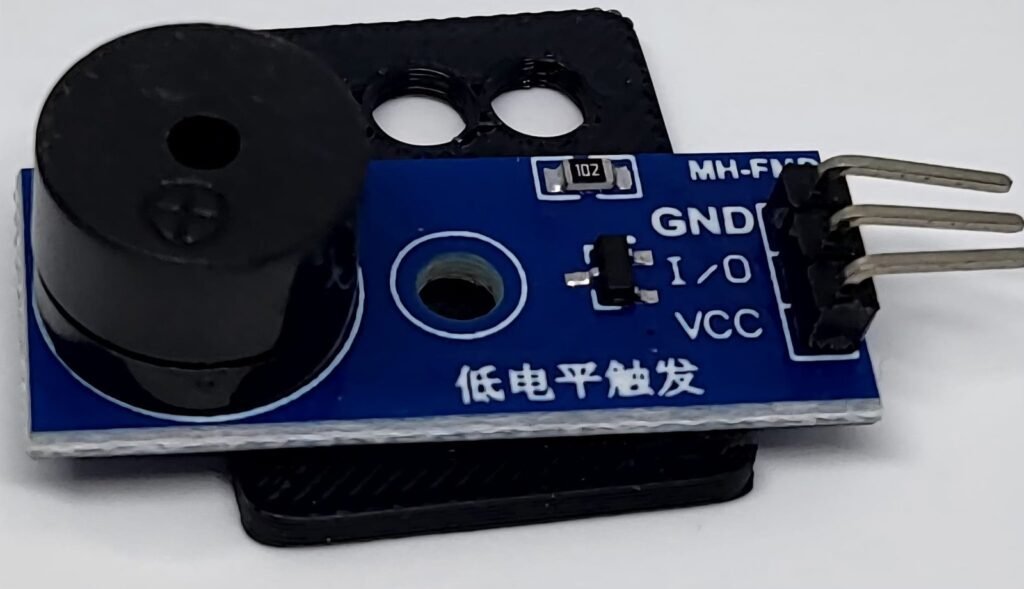
| Sound sensor (digital) | 1 | Signal → Pin 34, VCC, GND |
| L298N motor driver | 1 | Left IN1→18, IN2→19; Right IN3→5, IN4→23 |
| TT motors + wheels | 2 | L298N OUT1/OUT2 (left), OUT3/OUT4 (right) |
| 0.96″ OLED SSD1306 128×64 | 1 | I2C: SCL → Pin 22, SDA → Pin 21, VCC, GND |
| Smartphone (Bluetooth) | 1 | Connect to “Clu‑Bots” |
🔌 Wiring tip: Pins 34–39 are input‑only; use Pin 34 for sound. Keep motor wiring matched left/right to avoid reversed motion.
📍 Pin map snapshot: 34 (sound), 22/21 (OLED), 18/19/5/23 (motors). Others free.
Before you start
- USB cable is plugged in
- Serial monitor is open
- Test print shows:
print("Ready!") # Confirm serial is working so you can see messages
Microprojects 1–5
Microproject 5.11.1 – Voice command recognition (simulated with sound)
Goal: Use claps (sound=1) to print simple “voice” commands: 1 clap → “CMD:FWD”, 2 claps → “CMD:STOP”.
Blocks used:
- Digital input: Read Pin 34.
- Window timing: Count claps inside 800 ms.
- Serial println: Print commands.
Block sequence:
- Wait for first clap (sound=1).
- Start 800 ms window; count extra claps.
- Map count → commands; print them.
MicroPython code:
import machine  # Import machine to access Pin hardware
import time  # Import time to measure windows
sound = machine.Pin(34, machine.Pin.IN)  # Create sound sensor input on Pin 34
print("Microproject 5.11.1: Sound input ready on Pin 34")  # Confirm setup
while True:  # Continuous listening loop
    if sound.value() == 1:  # Detect a clap or loud sound
        window_start = time.ticks_ms()  # Record the start of the counting window
        claps = 1  # Count the first clap
        print("VOICE:CLAP_1")  # Print detection of first clap
        time.sleep(0.15)  # Debounce to avoid double counting the same clap
        while time.ticks_diff(time.ticks_ms(), window_start) < 800:  # 800 ms window for more claps
            if sound.value() == 1:  # Detect an additional clap
                claps += 1  # Increase clap count
                print("VOICE:CLAP_EXTRA", claps)  # Show updated number of claps
                time.sleep(0.15)  # Debounce after each detection
        if claps == 1:  # If just one clap in the window
            print("CMD:FWD")  # Print forward command (simulated voice)
        else:  # If two or more claps
            print("CMD:STOP")  # Print stop command (simulated voice)
        time.sleep(0.3)  # Small pause before listening again
Reflection: Claps become simple voice commands—short windows make them reliable.
Challenge:
- Easy: Map 3 claps to “CMD:LEFT”.
- Harder: Add a “SILENT” mode variable to ignore claps temporarily.
Microproject 5.11.2 – Performing simple tasks (bringing, watching)
Goal: Create basic task functions: BRING (move forward 1 s), WATCH (scan and print status), ANNOUNCE (print a message).
Blocks used:
- Digital outputs: Control L298N IN pins.
- Serial println: Print TASK status.
Block sequence:
- Setup motor pins.
- Define tasks as functions.
- Print clear “TASK:…” messages.
MicroPython code:
import machine  # Import machine to control motor pins
import time  # Import time to add delays for task duration
left_in1 = machine.Pin(18, machine.Pin.OUT)  # Left motor IN1 on Pin 18
left_in2 = machine.Pin(19, machine.Pin.OUT)  # Left motor IN2 on Pin 19
right_in3 = machine.Pin(5, machine.Pin.OUT)  # Right motor IN3 on Pin 5
right_in4 = machine.Pin(23, machine.Pin.OUT)  # Right motor IN4 on Pin 23
print("Microproject 5.11.2: Motors ready (18/19, 5/23)")  # Confirm motor setup
def motors_stop():  # Helper to stop both motors
    left_in1.value(0)  # Left IN1 LOW
    left_in2.value(0)  # Left IN2 LOW
    right_in3.value(0)  # Right IN3 LOW
    right_in4.value(0)  # Right IN4 LOW
    print("MOTORS:STOP")  # Print stop status
def motors_forward():  # Helper to move forward
    left_in1.value(1)  # Left IN1 HIGH
    left_in2.value(0)  # Left IN2 LOW
    right_in3.value(1)  # Right IN3 HIGH
    right_in4.value(0)  # Right IN4 LOW
    print("MOTORS:FWD")  # Print forward status
def task_bring():  # Task: BRING (move forward for 1 second)
    print("TASK:BRING_START")  # Announce task start
    motors_forward()  # Move forward
    time.sleep(1.0)  # Drive forward for one second
    motors_stop()  # Stop after movement
    print("TASK:BRING_DONE")  # Announce task completion
def task_watch():  # Task: WATCH (simulate scanning status)
    print("TASK:WATCH_START")  # Announce task start
    print("STATUS:AREA_CLEAR")  # Simulated status message
    time.sleep(0.5)  # Small delay to simulate scanning time
    print("TASK:WATCH_DONE")  # Announce task completion
def task_announce(text="HELLO"):  # Task: ANNOUNCE (say a message)
    print("TASK:ANNOUNCE", text)  # Print the message to the app/console
Reflection: Simple task functions make your robot feel helpful—clear starts and finishes matter.
Challenge:
- Easy: Add “task_turn_left” that turns 500 ms.
- Harder: Chain BRING → WATCH → ANNOUNCE in a mini routine.
Microproject 5.11.3 – Interaction via app and voice
Goal: Accept commands from both the app (BLE) and voice (claps), choosing safely which to run.
Blocks used:
- Bluetooth callback: Receive app commands.
- Priority rule: Prefer app over voice to avoid conflicts.
- Serial println: Print “SOURCE:APP/VOICE”.
Block sequence:
- Set priority = “APP”.
- On voice “CMD:…”, store last_voice_cmd.
- On app “CMD:…”, store last_app_cmd and execute.
- If only voice present, execute voice.
MicroPython code:
import ble_central  # Import BLE central role to scan/connect
import ble_peripheral  # Import BLE peripheral role to advertise name
import ble_handle  # Import BLE handler to receive messages
ble_c = ble_central.BLESimpleCentral()  # Create BLE central object
ble_p = ble_peripheral.BLESimplePeripheral('Clu-Bots')  # Create BLE peripheral named 'Clu-Bots'
ble_c.scan()  # Start scanning for peripherals
ble_c.connect(name='Clu-Bots')  # Connect to 'Clu-Bots' by name
print("Microproject 5.11.3: BLE connected")  # Confirm BLE setup
priority = "APP"  # Choose to prefer app commands over voice
last_voice_cmd = ""  # Store the latest voice command string
last_app_cmd = ""  # Store the latest app command string
print("Priority set to:", priority)  # Print current priority
def execute(cmd):  # Simple executor for a few commands
    print("EXEC:", cmd)  # Print what will run
    if cmd == "BRING":  # If BRING task requested
        task_bring()  # Call bring task
    elif cmd == "WATCH":  # If WATCH task requested
        task_watch()  # Call watch task
    elif cmd.startswith("ANNOUNCE:"):  # If ANNOUNCE with text
        task_announce(cmd.split(":", 1)[1])  # Call announce with text
    elif cmd == "STOP":  # If stop requested
        motors_stop()  # Stop motors
    else:  # Unknown command
        print("CMD:UNKNOWN", cmd)  # Report unknown command
def handle_method(key1, key2, key3, keyx):  # BLE receive callback
    global last_app_cmd  # Declare we update last_app_cmd
    msg = str(key1)  # Convert payload to text
    print("SOURCE:APP", msg)  # Label app source
    last_app_cmd = msg  # Store the latest app command
    execute(last_app_cmd)  # Execute app command immediately
handle = ble_handle.Handle()  # Create BLE handler object
handle.recv(handle_method)  # Attach BLE callback to receive messages
# Example voice path integration (call this when claps are interpreted elsewhere)
last_voice_cmd = "STOP"  # Simulate a voice STOP command coming in
print("SOURCE:VOICE", last_voice_cmd)  # Label voice source
if priority == "APP":  # If app has priority
    if last_app_cmd:  # If an app command exists
        execute(last_app_cmd)  # Execute app command (wins)
    else:  # If no app command
        execute(last_voice_cmd)  # Execute voice command
else:  # If voice has priority
    execute(last_voice_cmd)  # Execute voice command directly
Reflection: A simple priority rule avoids battles—pick who wins and apply it consistently.
Challenge:
- Easy: Switch priority to “VOICE”.
- Harder: Add a LOCK state (2 s) that ignores new commands after execution.
Microproject 5.11.4 – Routine programming
Goal: Create named routines (e.g., MORNING) that run a sequence of tasks in order.
Blocks used:
- List of steps: Store a list like [“ANNOUNCE:Good morning”, “WATCH”, “BRING”].
- Loop: Execute each step.
Block sequence:
- Define routines dict with named lists.
- Write run_routine(name).
- Print ROUTINE progress clearly.
MicroPython code:
routines = {  # Define dictionary of named routines
    "MORNING": ["ANNOUNCE:Good morning", "WATCH", "BRING"],  # Morning sequence
    "EVENING": ["ANNOUNCE:Good evening", "WATCH", "STOP"]  # Evening sequence
}
print("Microproject 5.11.4: Routines ready:", list(routines.keys()))  # Show routine names
def run_routine(name):  # Function to run a routine by name
    print("ROUTINE:START", name)  # Announce routine start
    steps = routines.get(name, [])  # Get step list or empty if not found
    for step in steps:  # Iterate through each step
        print("ROUTINE:STEP", step)  # Print current step
        execute(step)  # Execute step using the same executor
    print("ROUTINE:DONE", name)  # Announce routine completion
Reflection: Routines turn multiple taps into one button—easy for daily habits.
Challenge:
- Easy: Add a “SCHOOL” routine with 2–3 steps.
- Harder: Add a pause step like “WAIT:1000” that sleeps for 1 s.
Microproject 5.11.5 – Preference learning mode
Goal: Remember favorite tasks and speeds; adapt future actions (e.g., prefer BRING over WATCH).
Blocks used:
- Variables: prefer_task, prefer_speed.
- Update on use: Increment favorite counts.
- Serial println: Print “PREFER:…”.
Block sequence:
- Track counts per task.
- On execute(cmd), update counts.
- Print current preference.
MicroPython code:
prefer_counts = {"BRING": 0, "WATCH": 0, "ANNOUNCE": 0, "STOP": 0}  # Initialize task preference counts
prefer_speed = 60  # Simulated preferred speed percent
print("Microproject 5.11.5: Preference learning initialized")  # Confirm setup
def update_preferences(cmd):  # Function to update preference data
    key = "ANNOUNCE" if cmd.startswith("ANNOUNCE:") else cmd  # Normalize ANNOUNCE variants
    if key in prefer_counts:  # Check if key is tracked
        prefer_counts[key] += 1  # Increase usage count
    print("PREFER:COUNTS", prefer_counts)  # Print updated counts
    print("PREFER:SPEED", prefer_speed)  # Print preferred speed
def execute_with_learning(cmd):  # Wrapper to execute and learn
    update_preferences(cmd)  # Update preferences first
    execute(cmd)  # Execute the command using the same executor
Reflection: Preferences help your robot act “your way”—it notices what you ask most.
Challenge:
- Easy: Increase prefer_speed by 10 when BRING runs.
- Harder: If one task count is double the others, make routines start with that task.
Main project – Personal assistant robot
Blocks steps (with glossary)
- Voice (sound sensor): Turn claps into simple “CMD:…” strings.
- Tasks: BRING/WATCH/ANNOUNCE functions with clear start/stop prints.
- Interaction: App BLE callback plus voice priority rules.
- Routines: Named sequences that call tasks in order.
- Learning: Store preferences and adapt actions.
Block sequence:
- Setup sound input, motors, and OLED.
- Define tasks and an execute() function.
- Handle app commands with BLE callback; integrate voice.
- Run routines by name with progress prints.
- Update preferences after each execution.
MicroPython code (mirroring blocks)
# Project 5.11 – Personal Assistant Robot
import machine  # Control pins (sound, motors) and I2C (OLED)
import oled128x64  # SSD1306 OLED driver
import ble_central  # BLE central role
import ble_peripheral  # BLE peripheral role
import ble_handle  # BLE handler for callbacks
import time  # Timing for windows and delays
# Hardware setup
sound = machine.Pin(34, machine.Pin.IN)  # Sound sensor input on Pin 34
left_in1 = machine.Pin(18, machine.Pin.OUT)  # Left IN1 motor pin
left_in2 = machine.Pin(19, machine.Pin.OUT)  # Left IN2 motor pin
right_in3 = machine.Pin(5, machine.Pin.OUT)  # Right IN3 motor pin
right_in4 = machine.Pin(23, machine.Pin.OUT)  # Right IN4 motor pin
print("HW: Sound=34, Motors=18/19/5/23")  # Confirm hardware pins
i2c = machine.SoftI2C(scl=machine.Pin(22), sda=machine.Pin(21), freq=100000)  # I2C bus for OLED
oled = oled128x64.OLED(i2c, address=0x3c, font_address=0x3A0000, types=0)  # Initialize OLED display
print("OLED initialized at 0x3C")  # Confirm OLED setup
# BLE setup
ble_c = ble_central.BLESimpleCentral()  # Create BLE central
ble_p = ble_peripheral.BLESimplePeripheral('Clu-Bots')  # Peripheral named 'Clu-Bots'
ble_c.scan()  # Scan for BLE device
ble_c.connect(name='Clu-Bots')  # Connect to peripheral
handle = ble_handle.Handle()  # Create BLE callback handler
print("BLE connected and handler ready")  # Confirm BLE
# Preference data
prefer_counts = {"BRING": 0, "WATCH": 0, "ANNOUNCE": 0, "STOP": 0}  # Initialize counts
prefer_speed = 60  # Simulated preferred speed percent
print("Preferences initialized")  # Confirm preferences
# Priority and last commands
priority = "APP"  # Choose app priority over voice
last_app_cmd = ""  # Store most recent app command
last_voice_cmd = ""  # Store most recent voice command
print("Priority:", priority)  # Print chosen priority
# Motor helpers
def motors_stop():  # Stop motors
    left_in1.value(0)  # Left IN1 LOW
    left_in2.value(0)  # Left IN2 LOW
    right_in3.value(0)  # Right IN3 LOW
    right_in4.value(0)  # Right IN4 LOW
    print("MOTORS:STOP")  # Print stop
def motors_forward():  # Forward motion
    left_in1.value(1)  # Left IN1 HIGH
    left_in2.value(0)  # Left IN2 LOW
    right_in3.value(1)  # Right IN3 HIGH
    right_in4.value(0)  # Right IN4 LOW
    print("MOTORS:FWD")  # Print forward
# Task functions
def task_bring():  # BRING task
    print("TASK:BRING_START")  # Announce start
    oled.clear()  # Clear OLED
    oled.shows('BRING...', x=0, y=20, size=1, space=0, center=False)  # Show task text
    oled.show()  # Refresh OLED
    motors_forward()  # Move forward
    time.sleep(1.0)  # Drive for 1 second
    motors_stop()  # Stop motors
    oled.shows('BRING DONE', x=0, y=35, size=1, space=0, center=False)  # Show done text
    oled.show()  # Refresh OLED
    print("TASK:BRING_DONE")  # Announce completion
def task_watch():  # WATCH task
    print("TASK:WATCH_START")  # Announce start
    oled.clear()  # Clear OLED
    oled.shows('WATCH...', x=0, y=20, size=1, space=0, center=False)  # Show task text
    oled.show()  # Refresh OLED
    time.sleep(0.5)  # Simulate scanning time
    oled.shows('AREA CLEAR', x=0, y=35, size=1, space=0, center=False)  # Show status
    oled.show()  # Refresh OLED
    print("STATUS:AREA_CLEAR")  # Print status
    print("TASK:WATCH_DONE")  # Announce completion
def task_announce(text="HELLO"):  # ANNOUNCE task
    print("TASK:ANNOUNCE", text)  # Announce message
    oled.clear()  # Clear OLED
    oled.shows('ANNOUNCE:', x=0, y=10, size=1, space=0, center=False)  # Label text
    oled.shows(text, x=0, y=25, size=1, space=0, center=False)  # Show message
    oled.show()  # Refresh OLED
# Executor with learning
def update_preferences(cmd):  # Update preference counters
    key = "ANNOUNCE" if cmd.startswith("ANNOUNCE:") else cmd  # Normalize announce key
    if key in prefer_counts:  # If key tracked
        prefer_counts[key] += 1  # Increment usage
    print("PREFER:COUNTS", prefer_counts)  # Print counters
    print("PREFER:SPEED", prefer_speed)  # Print speed preference
def execute(cmd):  # Execute a command
    print("EXEC:", cmd)  # Print to serial/app
    update_preferences(cmd)  # Update learning data
    if cmd == "BRING":  # If bring requested
        task_bring()  # Run bring task
    elif cmd == "WATCH":  # If watch requested
        task_watch()  # Run watch task
    elif cmd.startswith("ANNOUNCE:"):  # If announce message
        task_announce(cmd.split(":", 1)[1])  # Run announce with text
    elif cmd == "STOP":  # If stop requested
        motors_stop()  # Stop movement
    else:  # Unknown
        print("CMD:UNKNOWN", cmd)  # Report unknown command
# Routines
routines = {  # Define named routines
    "MORNING": ["ANNOUNCE:Good morning", "WATCH", "BRING"],  # Morning steps
    "EVENING": ["ANNOUNCE:Good evening", "WATCH", "STOP"]  # Evening steps
}
print("Routines:", list(routines.keys()))  # Print routine names
def run_routine(name):  # Execute a routine by name
    print("ROUTINE:START", name)  # Announce start
    steps = routines.get(name, [])  # Get steps or empty
    for step in steps:  # Iterate steps
        print("ROUTINE:STEP", step)  # Print current step
        execute(step)  # Execute step
    print("ROUTINE:DONE", name)  # Announce completion
# BLE callback for app interaction
def handle_method(key1, key2, key3, keyx):  # BLE receive callback
    global last_app_cmd  # Declare global to store app command
    msg = str(key1)  # Convert payload to text
    print("SOURCE:APP", msg)  # Label app message
    last_app_cmd = msg  # Save latest app command
    if msg.startswith("ROUTINE:"):  # If routine call
        run_routine(msg.split(":", 1)[1])  # Run specific routine
    else:  # Otherwise treat as task
        execute(msg)  # Execute task command
handle.recv(handle_method)  # Attach BLE receive callback
# Voice integration: convert claps to commands (runs continuously)
def listen_voice_once():  # Listen for claps and return a command
    if sound.value() == 1:  # Detect first clap
        window_start = time.ticks_ms()  # Mark window start
        claps = 1  # First clap counted
        time.sleep(0.15)  # Debounce sensor ringing
        while time.ticks_diff(time.ticks_ms(), window_start) < 800:  # 800 ms window
            if sound.value() == 1:  # Another clap
                claps += 1  # Increase count
                time.sleep(0.15)  # Debounce
        cmd = "BRING" if claps == 1 else "STOP"  # Map claps to command
        print("SOURCE:VOICE", cmd)  # Label voice command
        return cmd  # Return mapped command
    return ""  # Return empty if no voice event
# Main loop: choose between app and voice by priority and run
while True:  # Continuous assistant loop
    voice_cmd = listen_voice_once()  # Try to get a voice command
    if priority == "APP":  # If app priority
        if last_app_cmd:  # If there is an app command stored
            execute(last_app_cmd)  # Execute app command
            last_app_cmd = ""  # Clear after running to avoid repeats
        elif voice_cmd:  # If voice command exists and no app command
            execute(voice_cmd)  # Execute voice command
    else:  # If voice priority
        if voice_cmd:  # If voice command exists
            execute(voice_cmd)  # Execute voice command first
        elif last_app_cmd:  # If app command exists afterward
            execute(last_app_cmd)  # Execute app command
            last_app_cmd = ""  # Clear after running
    time.sleep(0.2)  # Small delay to keep loop responsive without spamming
External explanation
- What it teaches: You built a personal assistant flow: voice claps to commands, app buttons to tasks, routines to chain actions, and preferences to learn what you like.
- Why it works: Sound input provides quick “voice” cues; BLE callbacks deliver app commands fast; clear task functions make actions predictable; routines simplify everyday sequences; preference counters guide future choices.
- Key concept: “Listen → decide → act → learn.”
Story time
Imagine your robot hearing a clap and moving to help, while your app sends a routine to start the day. It watches, announces, and remembers your style—becoming more “you” over time.
Debugging (2)
Debugging 5.11.1 – Misinterpreted commands
Problem: Robot runs the wrong task after a clap or app tap.
Clues: Serial shows SOURCE:VOICE/APP but EXEC prints an unexpected command.
Broken code:
cmd = "STOP" # Default set incorrectly (forces STOP on single clap)
Fixed code:
cmd = "BRING" if claps == 1 else "STOP"  # Map 1 clap to BRING, 2+ to STOP
print("MAP:CLAPS->CMD", claps, "->", cmd)  # Print mapping for clarity
Why it works: Explicit mapping prevents accidental defaults and shows the logic on serial.
Avoid next time: Always print how signals map to actions.
Debugging 5.11.2 – Unfinished tasks
Problem: Tasks start but don’t cleanly stop or announce completion.
Clues: Motors stay on or OLED doesn’t show “DONE”.
Broken code:
def task_bring():
    motors_forward()  # Starts motors
    # Missing stop and completion prints
Fixed code:
def task_bring():
    print("TASK:BRING_START")  # Announce start
    motors_forward()  # Start movement
    time.sleep(1.0)  # Duration
    motors_stop()  # Ensure stop
    print("TASK:BRING_DONE")  # Announce completion
Why it works: A clear start → do → stop → done pattern guarantees tasks finish reliably.
Avoid next time: Add “DONE” prints and stops in every task function.
Final checklist
- Voice claps map to commands and print clearly
- BRING/WATCH/ANNOUNCE tasks start, stop, and report “DONE”
- App commands execute immediately via BLE callback
- Routines run all steps in order and print progress
- Preferences update after each execution and print counts
Extras
- 🧠 Student tip: Add “SAFE MODE” that ignores voice for 5 seconds after any movement.
- 🧑🏫 Instructor tip: Have students sketch task diagrams (start → action → stop → done) before coding—it prevents unfinished tasks.
- 📖 Glossary:
- Priority rule: Policy deciding whether app or voice wins when both send commands.
- Routine: A named sequence of steps run in order.
- Preference learning: Keeping counts or settings that adapt actions to user habits.
- 💡 Mini tips:
- Keep messages short and labeled (TASK, ROUTINE, PREFER).
- Use small delays to avoid spamming the serial monitor.
- Test clap timing near the robot to reduce false detections.