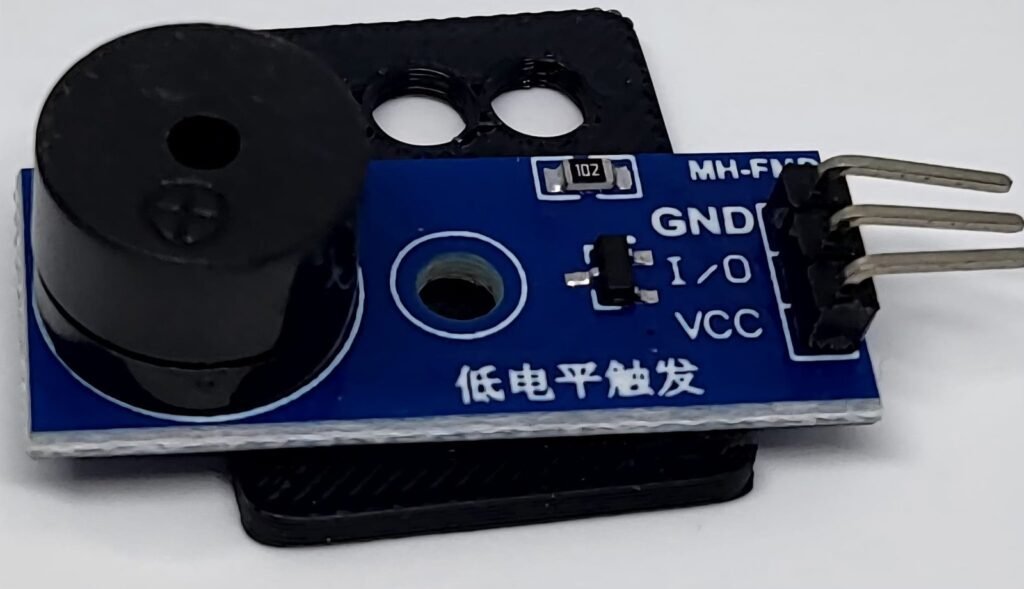
Project 1.12: "Total Integration N1"
🚀 Project 1.12 – Obstacle Avoidance
🎯 What You’ll Learn
- ✅ Goal 1: Detect obstacles using sensors.
- ✅ Goal 2: Stop or turn when obstacle detected.
- ✅ Goal 3: Combine logic for continuous navigation.
Key Ideas
- Digital input: Sensor readings.
- Logic: If/else for obstacle detection.
- Motor control: Forward, stop, turn.
- Loops: Continuous monitoring.
🧱 Blocks Glossary (used in this project)
pinX = machine.Pin(X, machine.Pin.OUT)→ Motor direction.pwmX = machine.PWM(machine.Pin(X))→ Motor speed control.pwmX.freq(2000)→ Set PWM frequency.pwmX.duty(value)→ Set duty cycle (0–1023).sonar.Sonar(trigger, echo).checkdist()→ Distance measurement.while True:→ Infinite loop.time.sleep()→ Delay.
🧰 What You Need
| Part | How many? | Pin connection |
|---|---|---|
| D1 R32 | 1 | USB cable |
| L298N Driver | 1 | IN1=Pin 2, IN2=Pin 4, ENA=Pin 5; IN3=Pin 12, IN4=Pin 13, ENB=Pin 14 |
| Motors | 2 | Connected to L298N outputs |
| Ultrasonic Sensor | 1 | Trigger=Pin 26, Echo=Pin 5 |
✅ Before You Start
- USB cable connected
- Motors and sensor wired correctly
- Test print shows:
print("Ready!") # Confirm serial is working
🎮 Microprojects (5 Mini Missions)
🎮 Microproject 1.12.1 – Read distance
Blocks used: External sensor (sonar), Serial print
Block sequence:
- Setup sonar sensor
- Read distance
- Print value
MicroPython Code:
import machine, time, sonar                   # Import modules
sensor = sonar.Sonar(26, 5)                   # Trigger pin 26, Echo pin 5
while True:                                   # Infinite loop
    dist = sensor.checkdist()                 # Read distance
    print("Distance:", dist, "cm")            # Serial log
    time.sleep(0.5)                           # Delay
Reflection: Sensor reads distance continuously.
Challenge: Try faster refresh (0.2s).
🎮 Microproject 1.12.2 – Stop at obstacle
Blocks used: External sensor, Motor control, Logic
Block sequence:
- Setup motors forward
- If distance < 20 cm → stop
MicroPython Code:
import machine, time, sonar                   # Import modules
# Motor A setup
pin2 = machine.Pin(2, machine.Pin.OUT)        # Motor A IN1
pin4 = machine.Pin(4, machine.Pin.OUT)        # Motor A IN2
pwm5 = machine.PWM(machine.Pin(5))            # Motor A ENA PWM
# Motor B setup
pin12 = machine.Pin(12, machine.Pin.OUT)      # Motor B IN3
pin13 = machine.Pin(13, machine.Pin.OUT)      # Motor B IN4
pwm14 = machine.PWM(machine.Pin(14))          # Motor B ENB PWM
# Sensor setup
sensor = sonar.Sonar(26, 5)                   # Trigger pin 26, Echo pin 5
pwm5.freq(2000); pwm14.freq(2000)             # Set frequencies
pwm5.duty(512); pwm14.duty(512)               # Set speeds
while True:                                   # Infinite loop
    dist = sensor.checkdist()                 # Read distance
    print("Distance:", dist, "cm")            # Serial log
    if dist < 20:                             # If obstacle closer than 20 cm
        pwm5.duty(0); pwm14.duty(0)           # Stop motors
        print("Obstacle detected: STOP")      # Serial log
    else:                                     # If safe distance
        pin2.value(1); pin4.value(0)          # Motor A forward
        pin12.value(1); pin13.value(0)        # Motor B forward
        pwm5.duty(512); pwm14.duty(512)       # Motors ON
        print("Path clear: GO")               # Serial log
    time.sleep(0.2)                           # Delay
Reflection: Robot stops when obstacle detected.
Challenge: Try different threshold (30 cm).
🎮 Microproject 1.12.3 – Turn at obstacle
Blocks used: External sensor, Motor control, Logic
Block sequence:
- Setup motors forward
- If distance < 20 cm → turn left
MicroPython Code:
import machine, time, sonar                   # Import modules
# Motor setup
pin2 = machine.Pin(2, machine.Pin.OUT)
pin4 = machine.Pin(4, machine.Pin.OUT)
pwm5 = machine.PWM(machine.Pin(5))
pin12 = machine.Pin(12, machine.Pin.OUT)
pin13 = machine.Pin(13, machine.Pin.OUT)
pwm14 = machine.PWM(machine.Pin(14))
sensor = sonar.Sonar(26, 5)                   # Sensor setup
pwm5.freq(2000); pwm14.freq(2000)
pwm5.duty(512); pwm14.duty(512)
while True:
    dist = sensor.checkdist()                 # Read distance
    print("Distance:", dist, "cm")
    if dist < 20:                             # Obstacle detected
        pwm5.duty(0)                          # Stop motor A
        pwm14.duty(512)                       # Motor B forward
        print("Obstacle: TURN LEFT")          # Serial log
        time.sleep(1)                         # Turn left
    else:                                     # Path clear
        pin2.value(1); pin4.value(0)
        pin12.value(1); pin13.value(0)
        pwm5.duty(512); pwm14.duty(512)
        print("Path clear: GO")
    time.sleep(0.2)
Reflection: Robot turns left when obstacle detected.
Challenge: Try right turn instead.
🎮 Microproject 1.12.4 – Continuous navigation
Blocks used: External sensor, Motor control, Loop
Block sequence:
- Forward until obstacle
- Turn left
- Continue
MicroPython Code:
import machine, time, sonar                   # Import modules
pin2 = machine.Pin(2, machine.Pin.OUT)
pin4 = machine.Pin(4, machine.Pin.OUT)
pwm5 = machine.PWM(machine.Pin(5))
pin12 = machine.Pin(12, machine.Pin.OUT)
pin13 = machine.Pin(13, machine.Pin.OUT)
pwm14 = machine.PWM(machine.Pin(14))
sensor = sonar.Sonar(26, 5)
pwm5.freq(2000); pwm14.freq(2000)
while True:
    dist = sensor.checkdist()
    print("Distance:", dist, "cm")
    if dist < 20:
        pwm5.duty(0)
        pwm14.duty(512)
        print("TURN LEFT")
        time.sleep(1)
    else:
        pin2.value(1); pin4.value(0)
        pin12.value(1); pin13.value(0)
        pwm5.duty(512); pwm14.duty(512)
        print("GO")
    time.sleep(0.2)
Reflection: Robot navigates continuously avoiding obstacles.
Challenge: Add random turns for variety.
🎮 Microproject 1.12.5 – Smart avoidance
Blocks used: External sensor, Logic, Motor control
Block sequence:
- If distance < 10 cm → stop
- If distance < 20 cm → turn left
- Else → go forward
MicroPython Code:
import machine, time, sonar                   # Import modules
# Motor A setup
pin2 = machine.Pin(2, machine.Pin.OUT)        # Motor A IN1
pin4 = machine.Pin(4, machine.Pin.OUT)        # Motor A IN2
pwm5 = machine.PWM(machine.Pin(5))            # Motor A ENA PWM
# Motor B setup
pin12 = machine.Pin(12, machine.Pin.OUT)      # Motor B IN3
pin13 = machine.Pin(13, machine.Pin.OUT)      # Motor B IN4
pwm14 = machine.PWM(machine.Pin(14))          # Motor B ENB PWM
# Sensor setup
sensor = sonar.Sonar(26, 5)                   # Trigger pin 26, Echo pin 5
# Configure PWM frequency
pwm5.freq(2000)                               # Motor A frequency
pwm14.freq(2000)                              # Motor B frequency
while True:                                   # Infinite loop
    dist = sensor.checkdist()                 # Read distance
    print("Distance:", dist, "cm")            # Serial log
    if dist < 10:                             # If obstacle very close
        pwm5.duty(0)                          # Stop motor A
        pwm14.duty(0)                         # Stop motor B
        print("STOP: Obstacle too close")     # Serial log
    elif dist < 20:                           # If obstacle moderately close
        pwm5.duty(0)                          # Stop motor A
        pwm14.duty(512)                       # Motor B forward
        print("TURN LEFT: Obstacle detected") # Serial log
        time.sleep(1)                         # Turn left
    else:                                     # If path clear
        pin2.value(1); pin4.value(0)          # Motor A forward
        pin12.value(1); pin13.value(0)        # Motor B forward
        pwm5.duty(512); pwm14.duty(512)       # Motors ON
        print("GO: Path clear")               # Serial log
    time.sleep(0.2)                           # Delay for stability
Reflection: Robot stops if obstacle is too close, turns if moderately close, and moves forward otherwise.
Challenge: Add right turn option for variety.
✨ Main Project – Obstacle Avoidance
🔧 Blocks Steps (with glossary)
- External sensor: Detect distance.
- Logic: Decide stop, turn, or go.
- Motor control: Execute movement.
- Loop: Continuous navigation.
Block sequence:
- Setup motors and sensor.
- Read distance.
- Stop if too close.
- Turn if moderately close.
- Move forward if clear.
📖 External Explanation
This project shows how robots avoid obstacles using sensors.
- Ultrasonic sensor measures distance.
- Logic decides whether to stop, turn, or go.
- Motors execute the decision.
This is the foundation of autonomous navigation.
✨ Story Time
Imagine your robot as an explorer 🛤️. It moves forward until it sees a wall. If the wall is too close, it stops. If it’s near but not too close, it turns left to find a new path. If the way is clear, it continues its journey.
🕵️ Debugging (2 Common Problems)
🐞 Debugging 1.12.A – Sensor always reads 0
Problem: Distance always 0 cm.
Clues: Echo pin not connected.
Broken code/wiring:
sensor = sonar.Sonar(26, 0) # Wrong echo pin
Fixed code:
sensor = sonar.Sonar(26, 5) # Correct echo pin
Why it works: Correct wiring ensures sensor reads properly.
🐞 Debugging 1.12.B – Robot spins endlessly
Problem: Motors keep turning even when path is clear.
Clues: Duty cycle not reset.
Broken code:
elif dist < 20:
    pwm5.duty(0)
    pwm14.duty(512)
# Missing reset after turn
Fixed code:
elif dist < 20:
    pwm5.duty(0)
    pwm14.duty(512)
    time.sleep(1)
    pwm5.duty(512); pwm14.duty(512)   # Reset speeds
Why it works: Resetting duty cycles restores forward motion.
✅ Final Checklist
- Sensor reads distance.
- Robot stops at close obstacles.
- Robot turns at moderate obstacles.
- Robot moves forward when clear.
- Continuous navigation works.
📚 Extras
- 🧠 Student tip: Try different thresholds (10 cm, 30 cm).
- 🧑🏫 Instructor tip: Show how sensor readings change with hand movement.
- 📖 Glossary: Sonar, trigger, echo, threshold.
- 💡 Mini tip: Always test sensor separately before combining with motors.